

Looking for the game?
How to use this guide
The complete rules of Prisma are written below, and are divided into numbered sections. Within each section you will find a collection of diagrams that help to illustrate the relevant concepts. Tap on a diagram to enlarge it. You can navigate between the enlarged diagrams by clicking on the left and right arrow buttons (on a computer or tablet with a physical keyboard) or by swiping left or right (on a mobile phone or tablet screen). The diagram captions also provide helpful details.
If you have any questions that are not answered here, or if you would like to share any comments about how we can improve this guide, please use the form at the bottom of the page. We will reply as quickly as possible!
Goal of the game
Prisma is a game of strategy for 2-4 players in which beams of light are guided and deflected between opponents. Players succeed by making loops, creating patterns and relocating tiles to maximize their position on the table.
Components
- 60 light tiles
- 1 direction marker in red, blue, yellow and purple
- 6 loop markers and 1 frozen loop marker in each color
- 1 6-sided die
A set of flashcards is also included in the box to help players quickly learn key game concepts

1. Setup
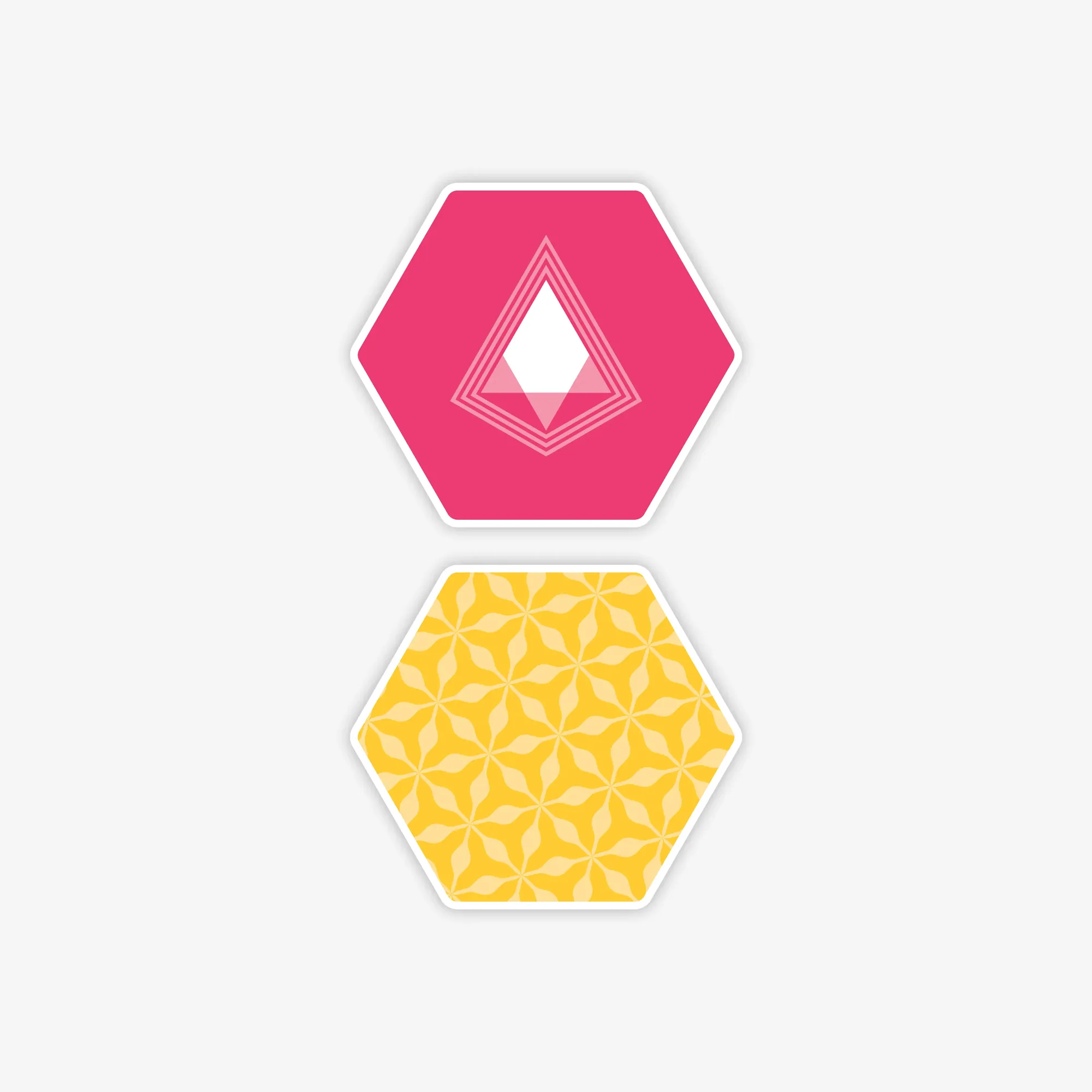
- Players take turns rolling the die. The one with the highest number picks their color and plays first. Prisma is played clockwise.
- Shuffle the light tiles face down. For 2 players draw 2 stacks of 20 tiles. For 3 or 4 players draw stacks of 15 tiles. Give a stack to each player and return any remaining tiles to the box.
- Each player claims a direction by placing their direction marker in the center of the table and pointing it toward themselves. Direction markers must touch one another along their sides.
- Each player draws light tiles from their stack and flips them face up in a row. For 2 players draw 4 tiles each. For 3 or 4 players draw 3 tiles each. These tiles make up a player’s opening hand.

2. Gameplay
Prisma is divided into the opening, middle and closing turns.
2.1 Opening turns
The first player places a light tile from their hand. It must touch at least 1 direction marker along its sides. The next player places a tile, which must touch at least 1 direction marker or light tile along its sides. Tiles placed in the opening turns do not need to connect to other tiles already on the table, although they may.
Players keep placing tiles until the opening hands are empty.
2.2 Middle turns
Players start the middle turns by drawing 4 light tiles face up into their hand. For the rest of the game players will place a total of 2 tiles during each turn.
Players may be able to carry out the following actions: make loops, link paths, relocate tiles, make patterns, or place/remove a loop castle. Players may choose whether to take an available action, but it may not be saved for later use.
A player’s turn ends once both tiles are placed and all desired available actions have been completed. The player draws 2 tiles face up from their stack.
2.3 Closing turns
The closing turns start once the first player has drawn the last 2 tiles from their stack. Gameplay continues as in the middle turns, but for the rest of the game loops may no longer be broken.
2.4 Game end
The game ends when 1) the last player has finished their final turn or 2) a player places their sixth scoring loop marker.
3. Placing tiles
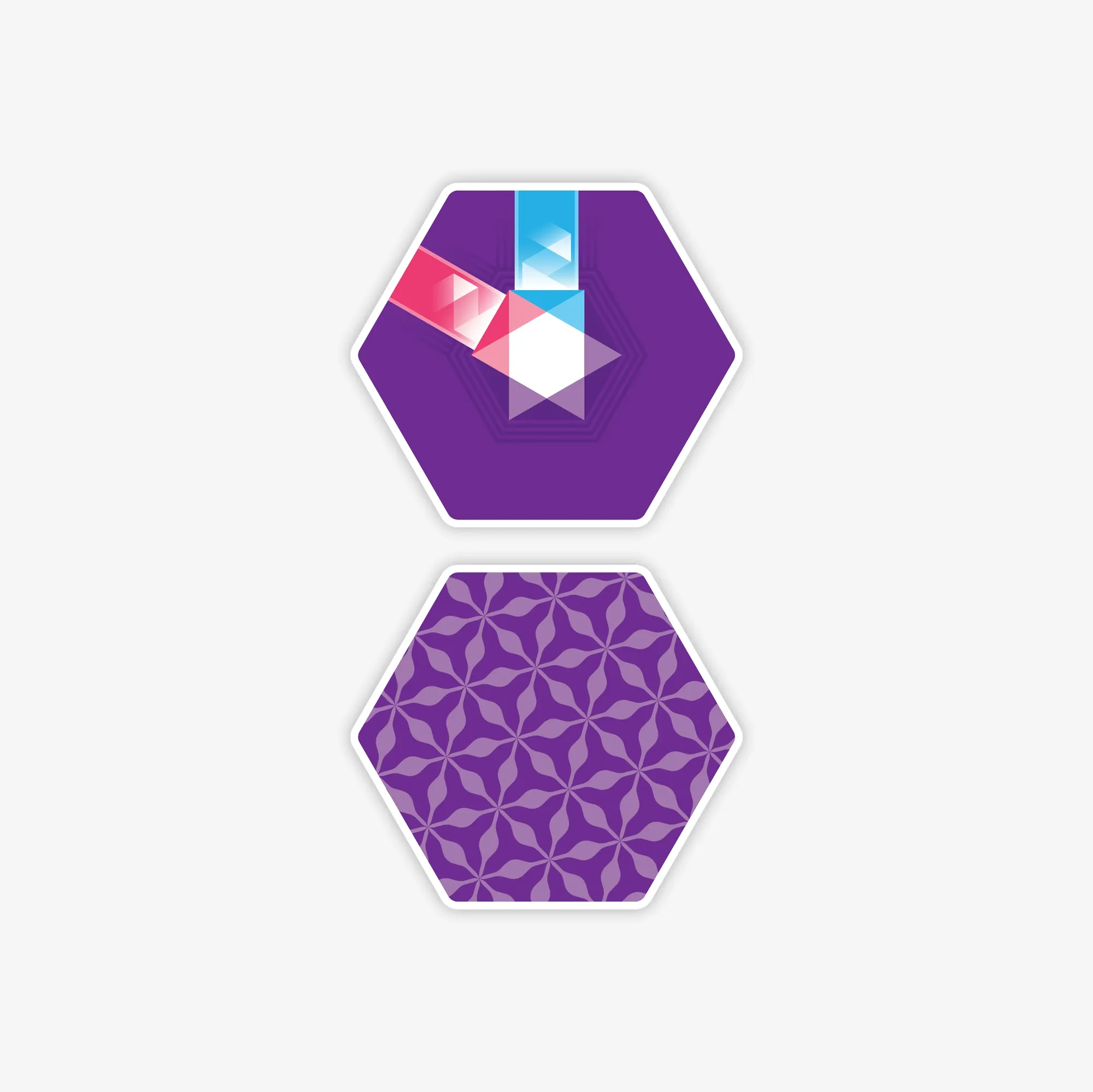
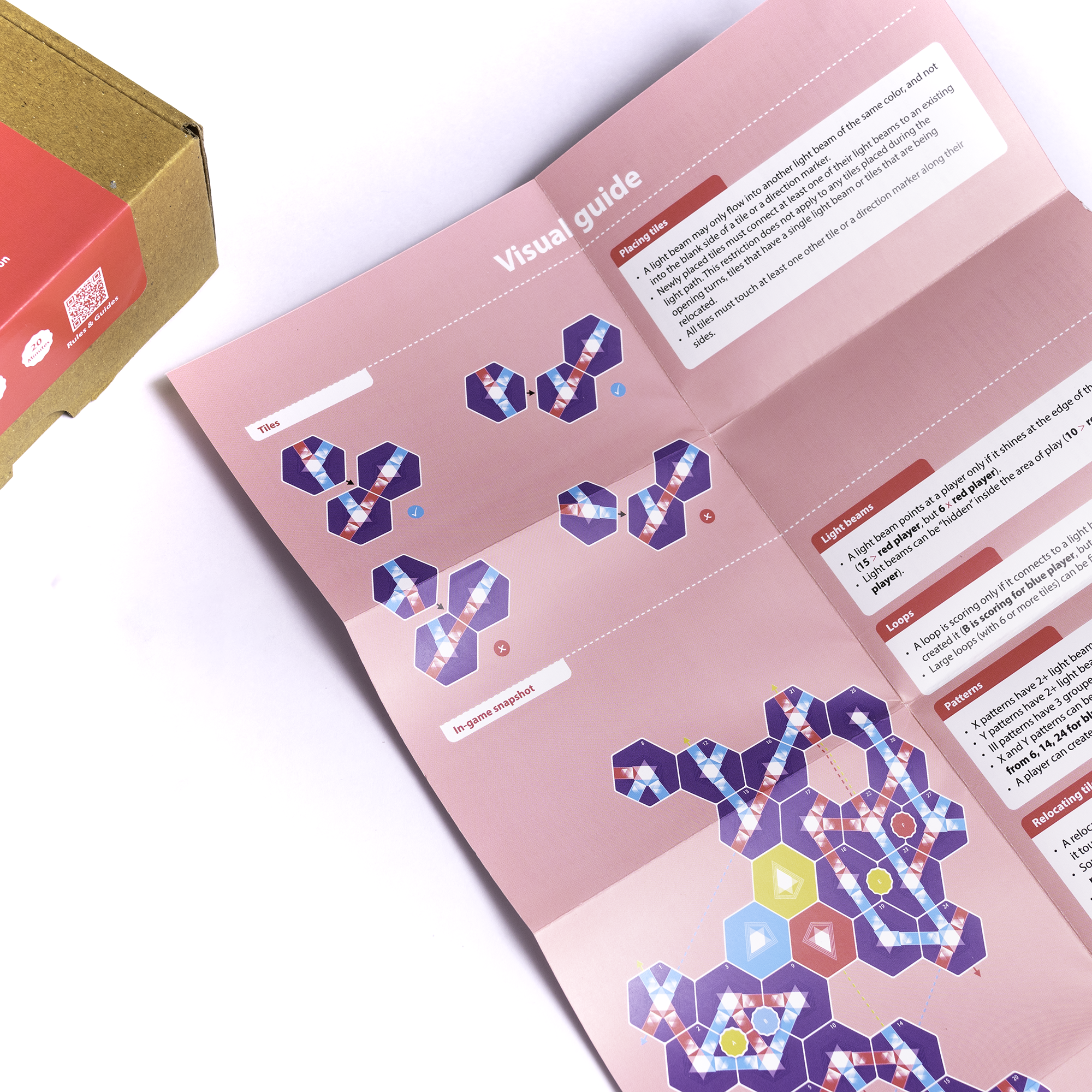
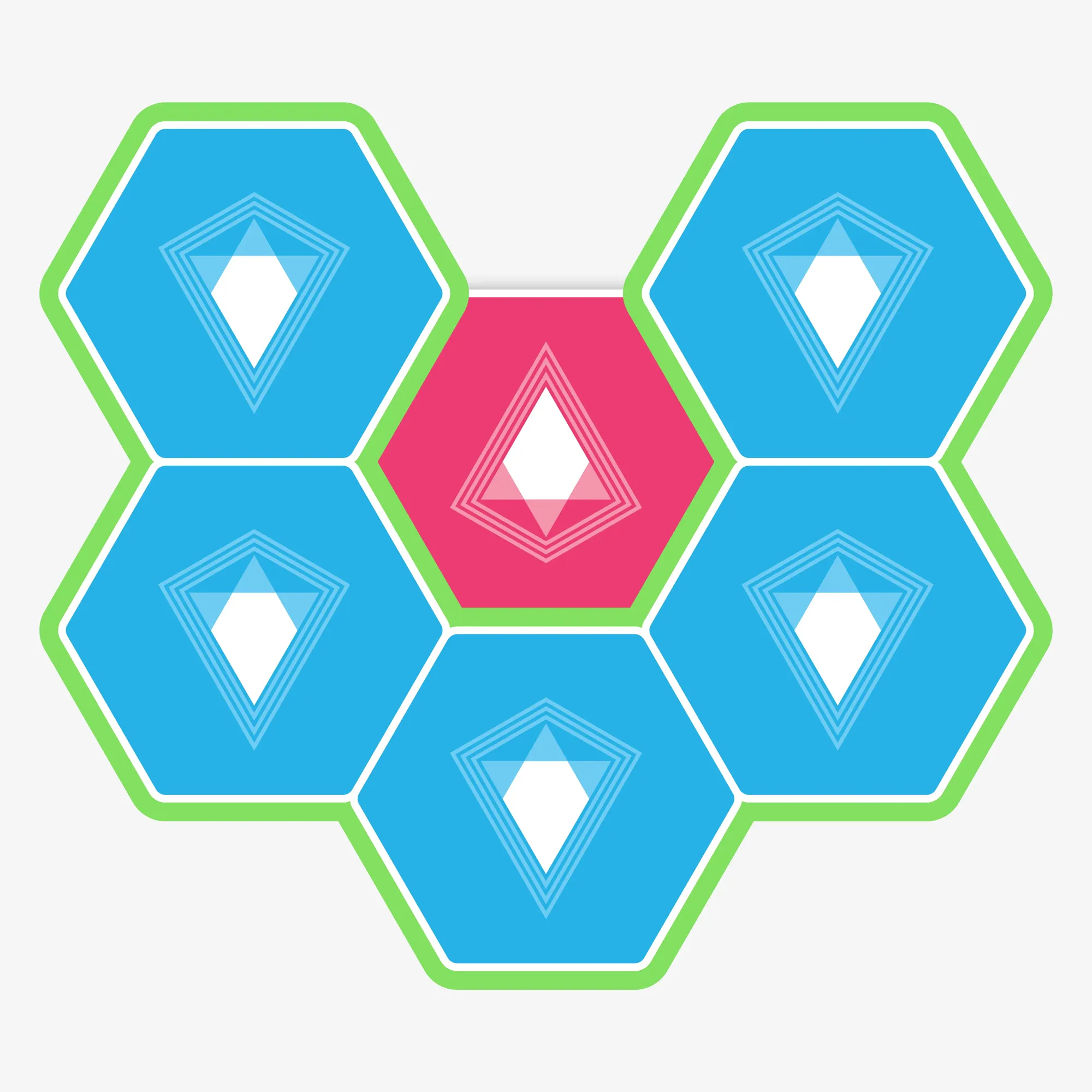
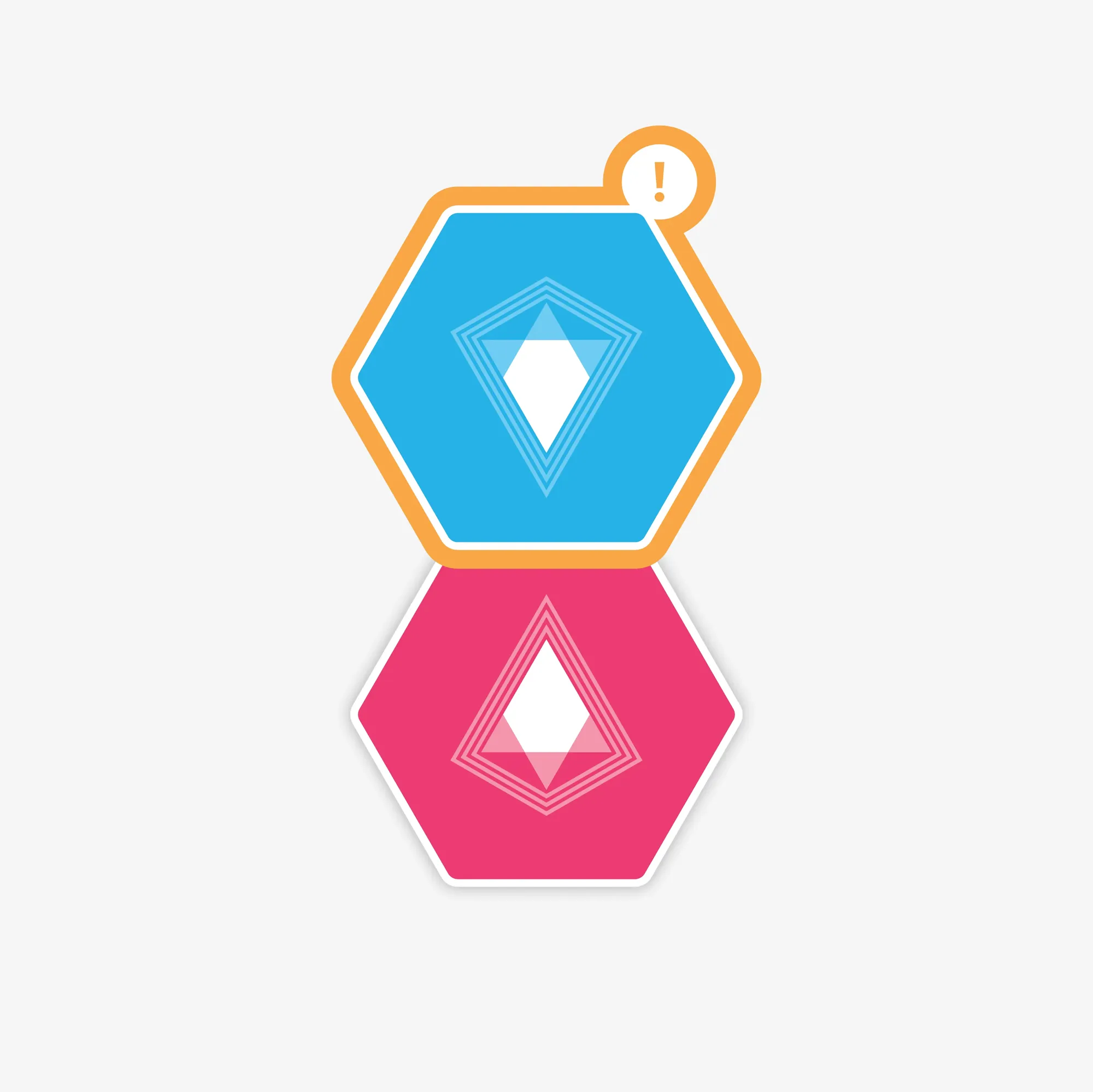
Light beams are colored red or blue. A light beam may only flow into another light beam of the same color, and not into the blank side of another tile or a direction marker.
Newly placed tiles must connect at least 1 of their light beams to an existing light path. This restriction does not apply to 1) any tiles placed during the opening turns, 2) tiles that have a single light beam or 3) tiles that are being relocated.
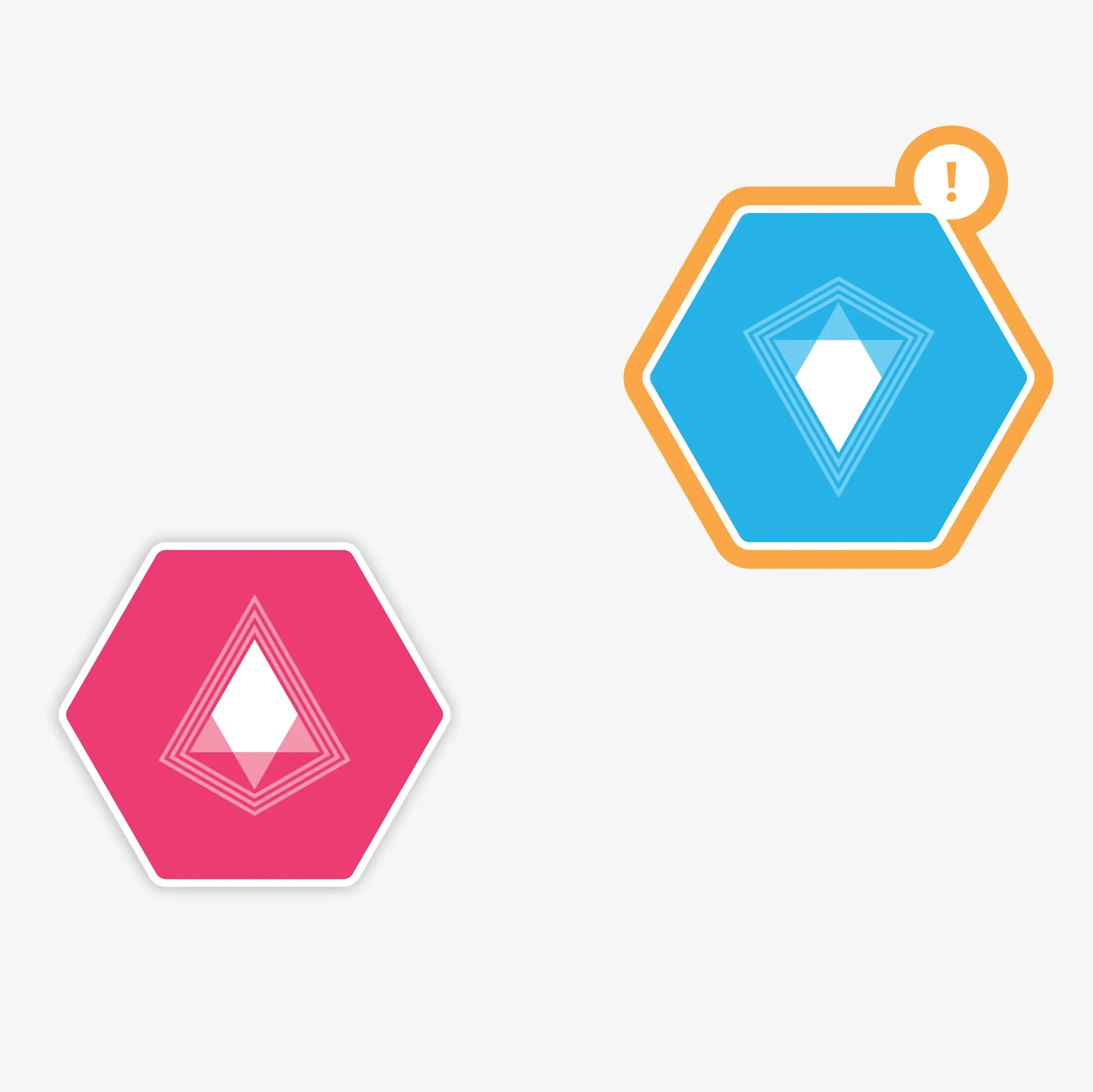
All light tiles must touch at least 1 other tile or a direction marker along their sides. No islands of tiles may be allowed to form that are separated from the central formation of tiles.
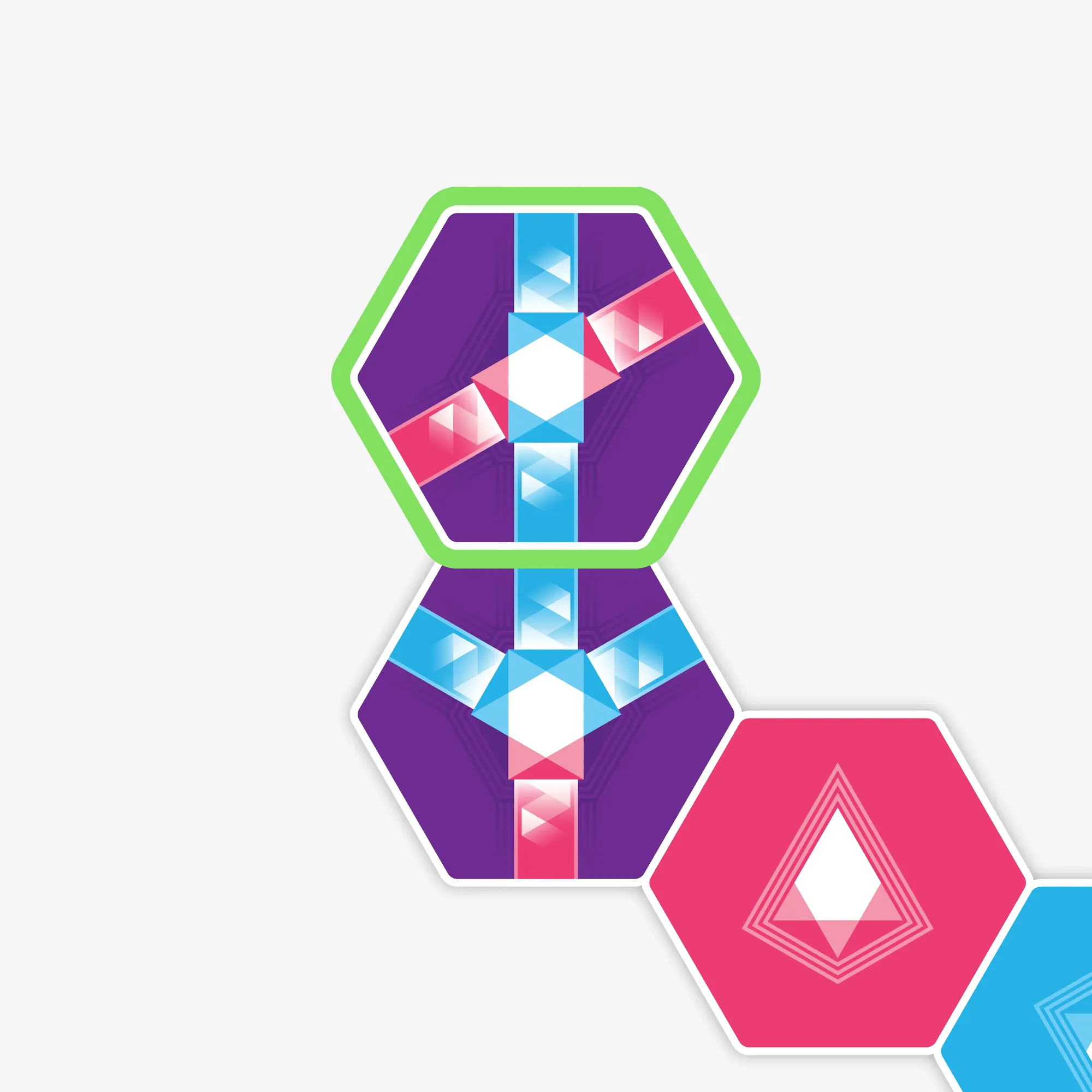
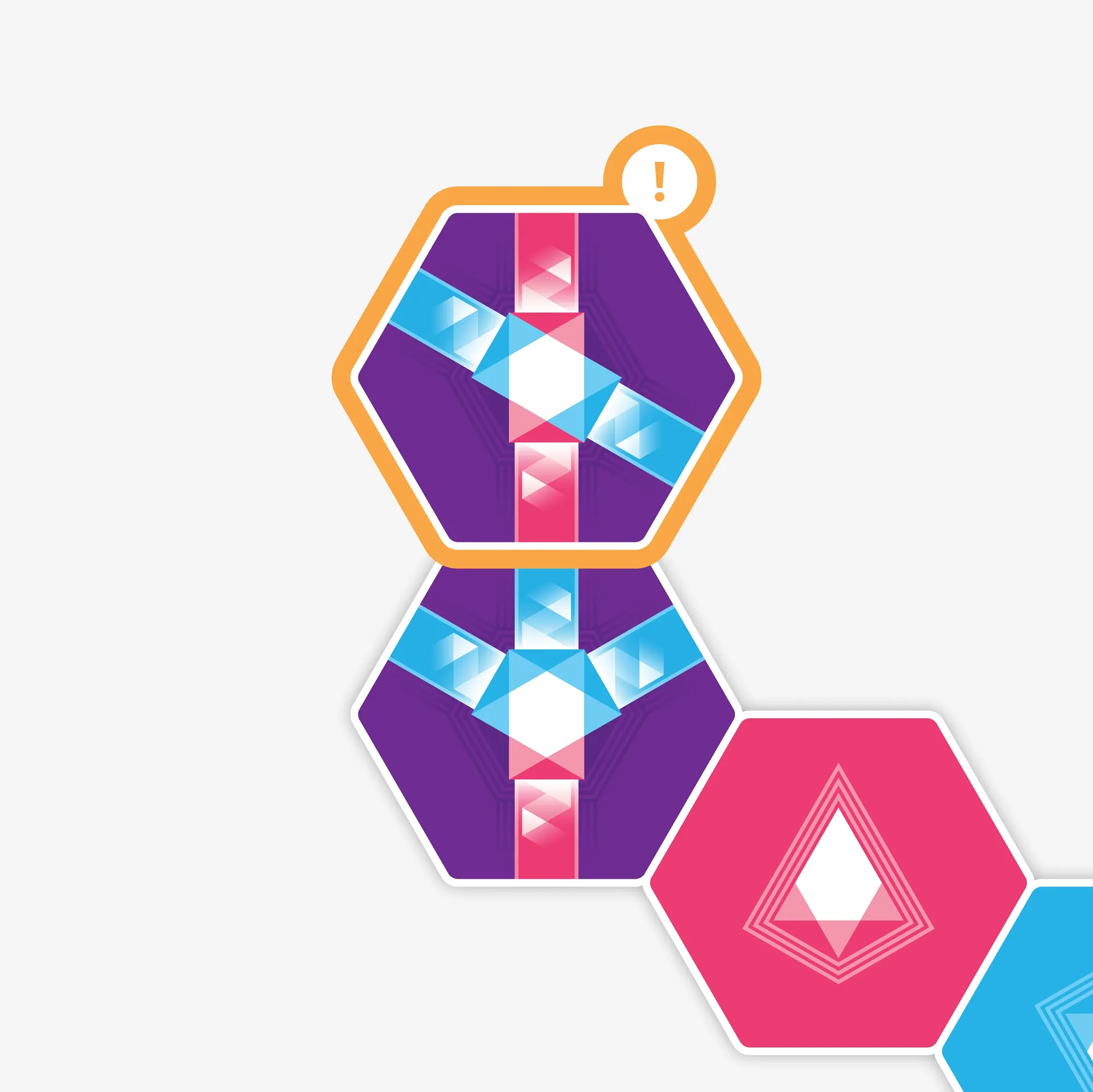
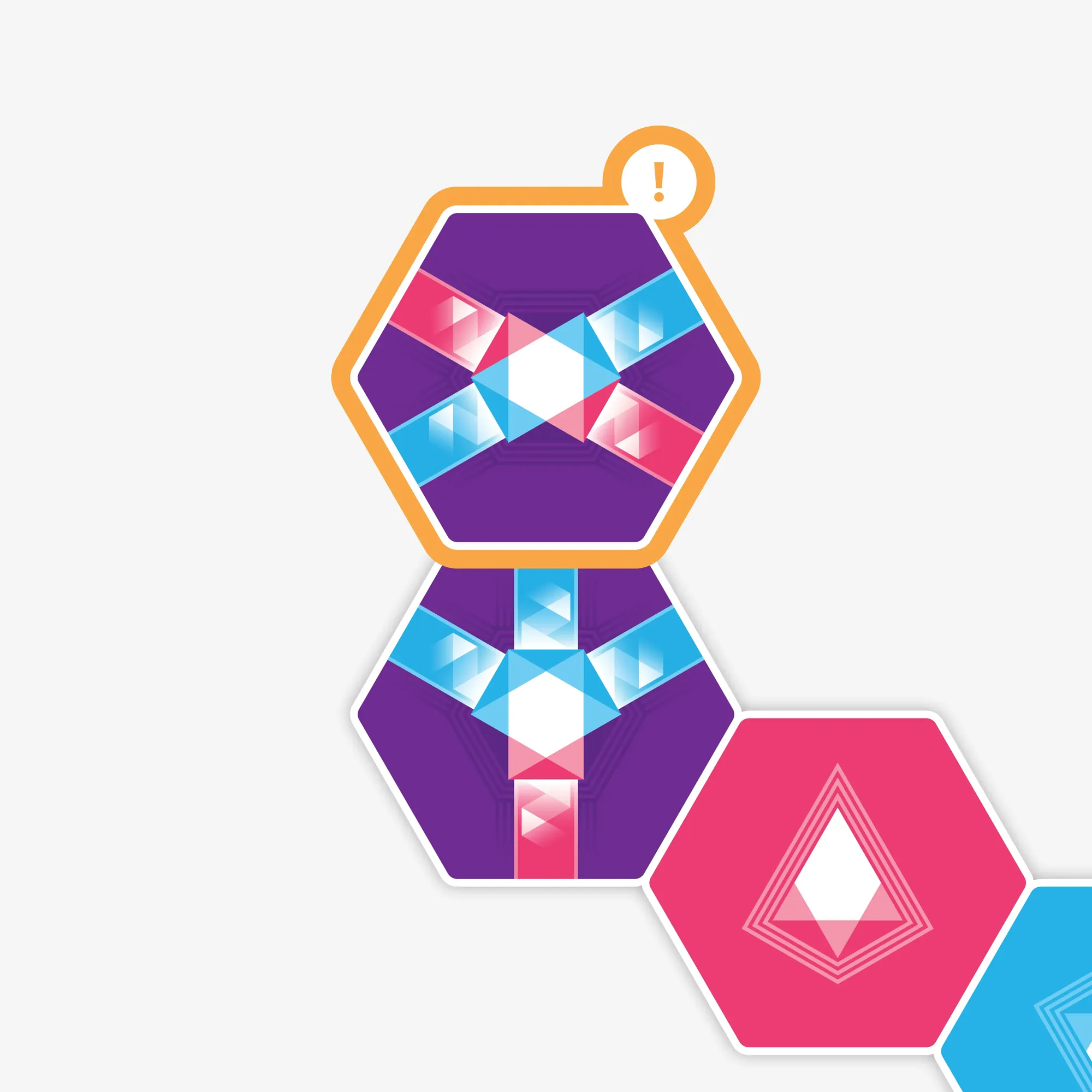
Multitasking tiles
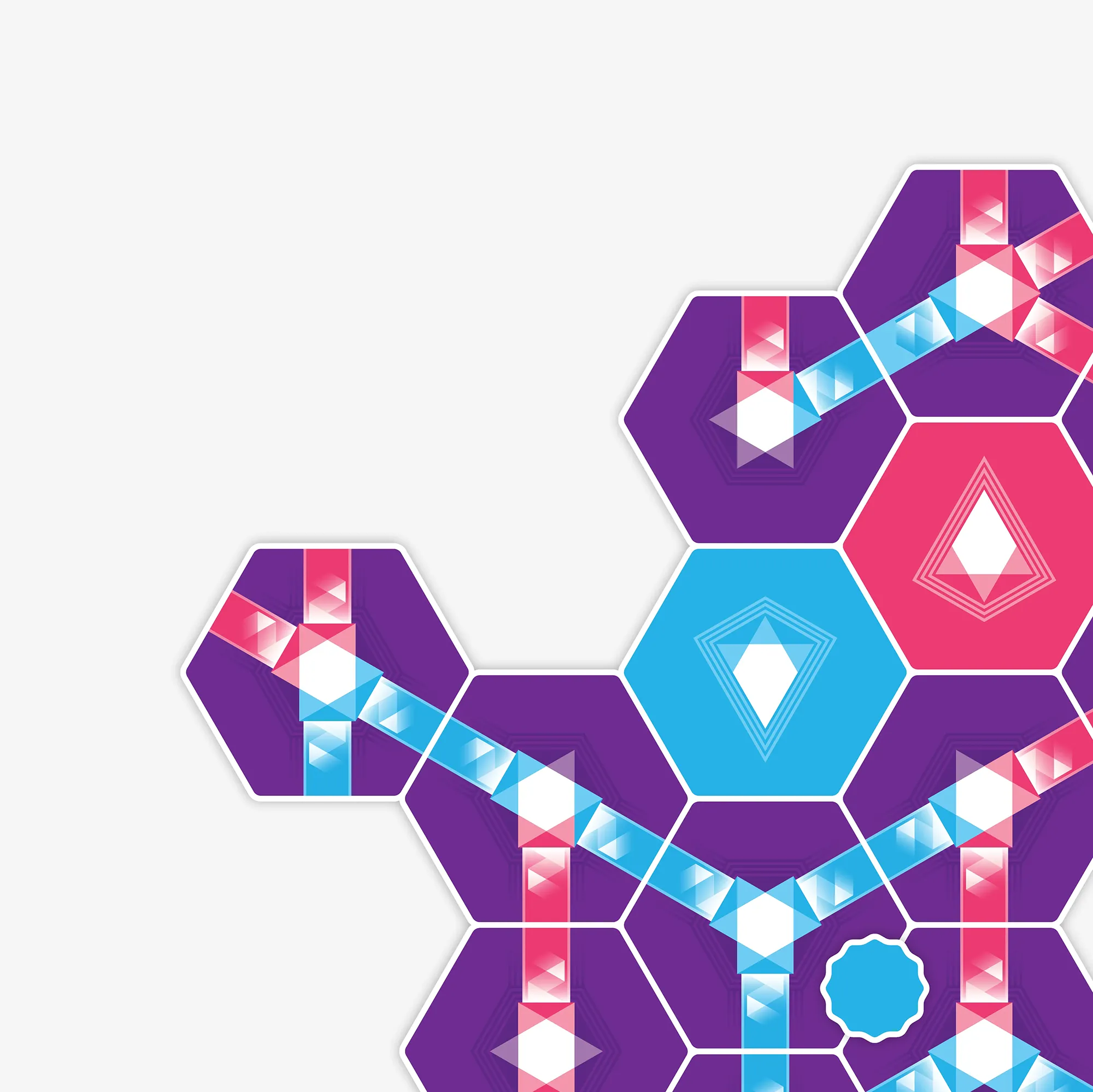
At any given moment a single tile can be simultaneously involved in multiple formations, such as loops and patterns, and sometimes for more than one player.
4. Making loops
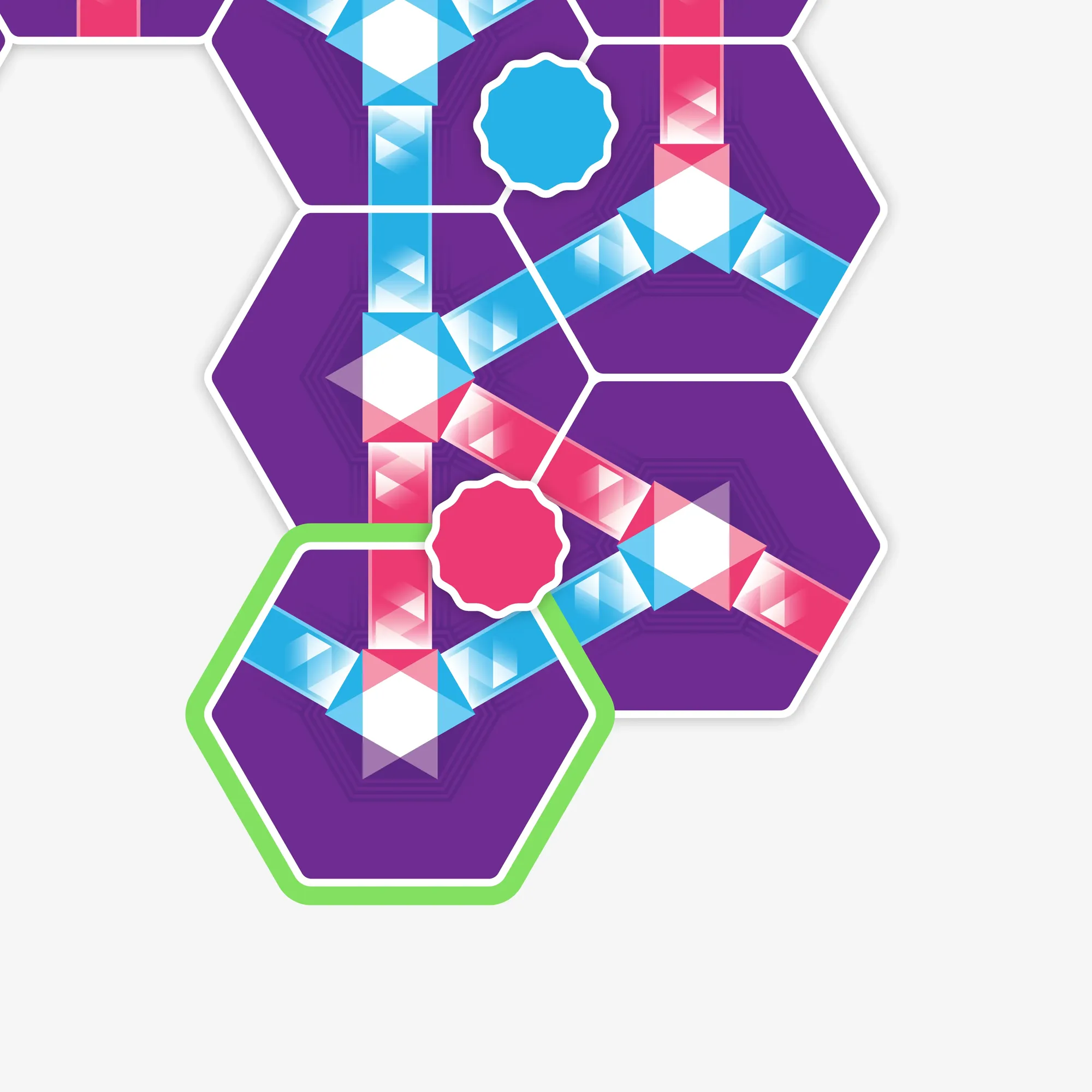
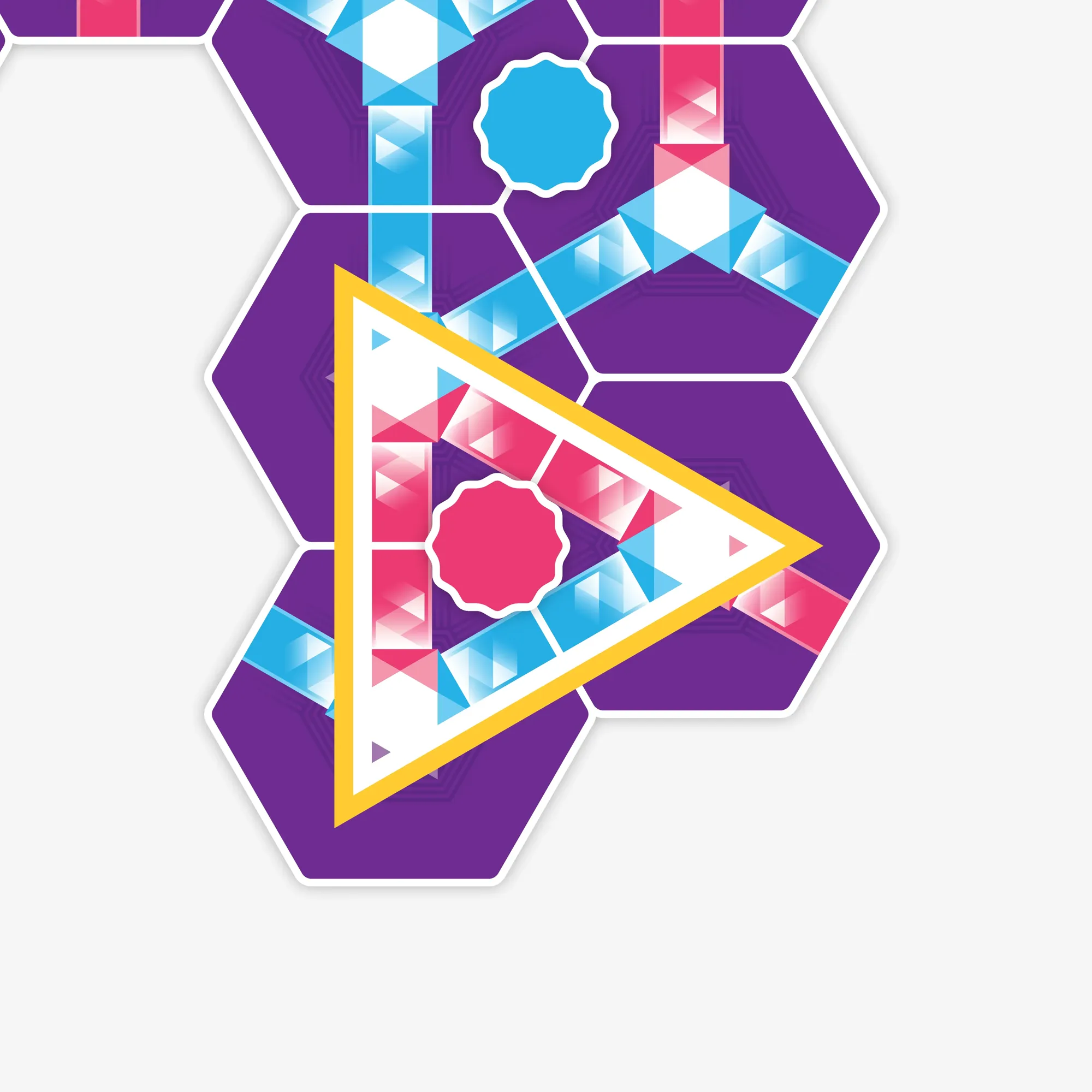
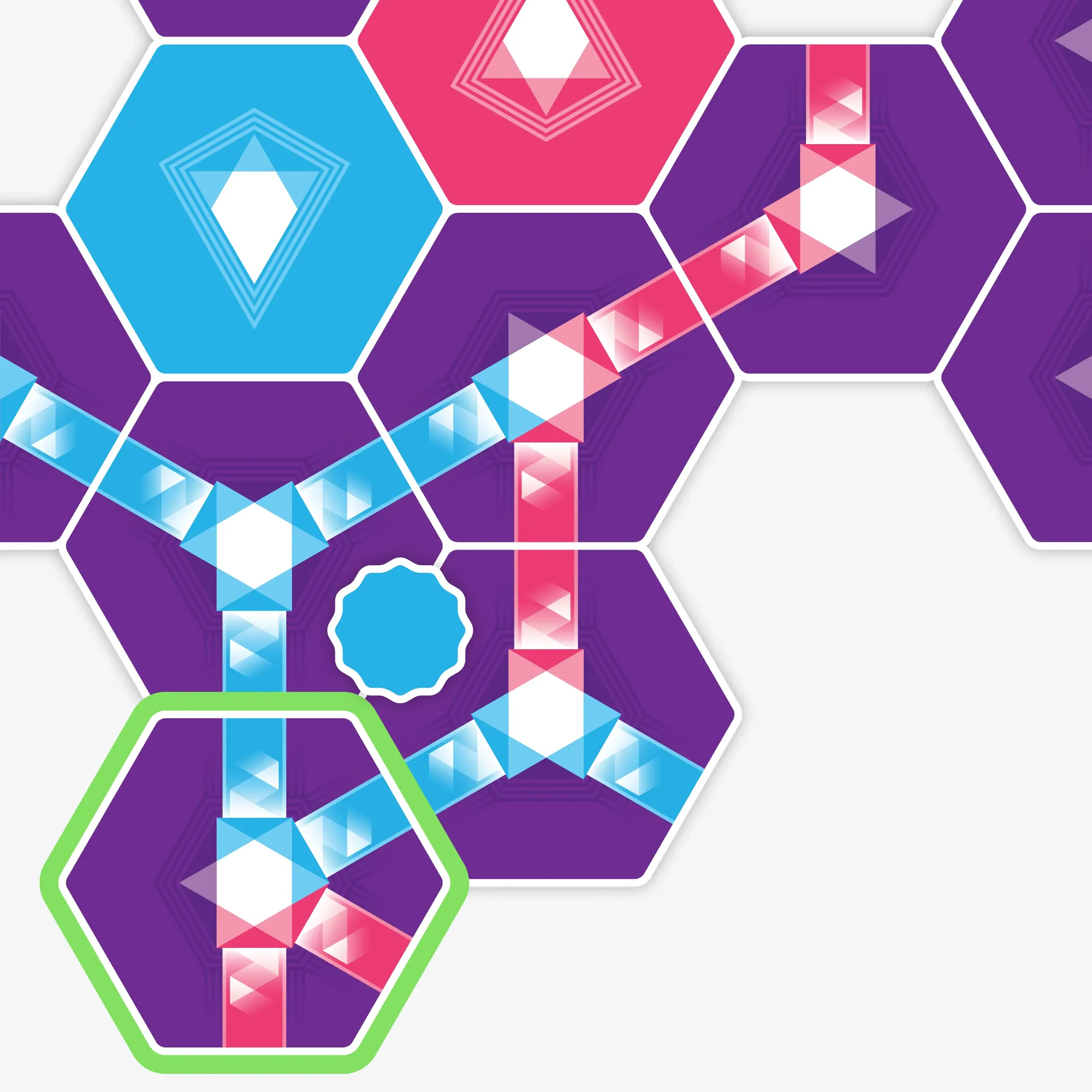
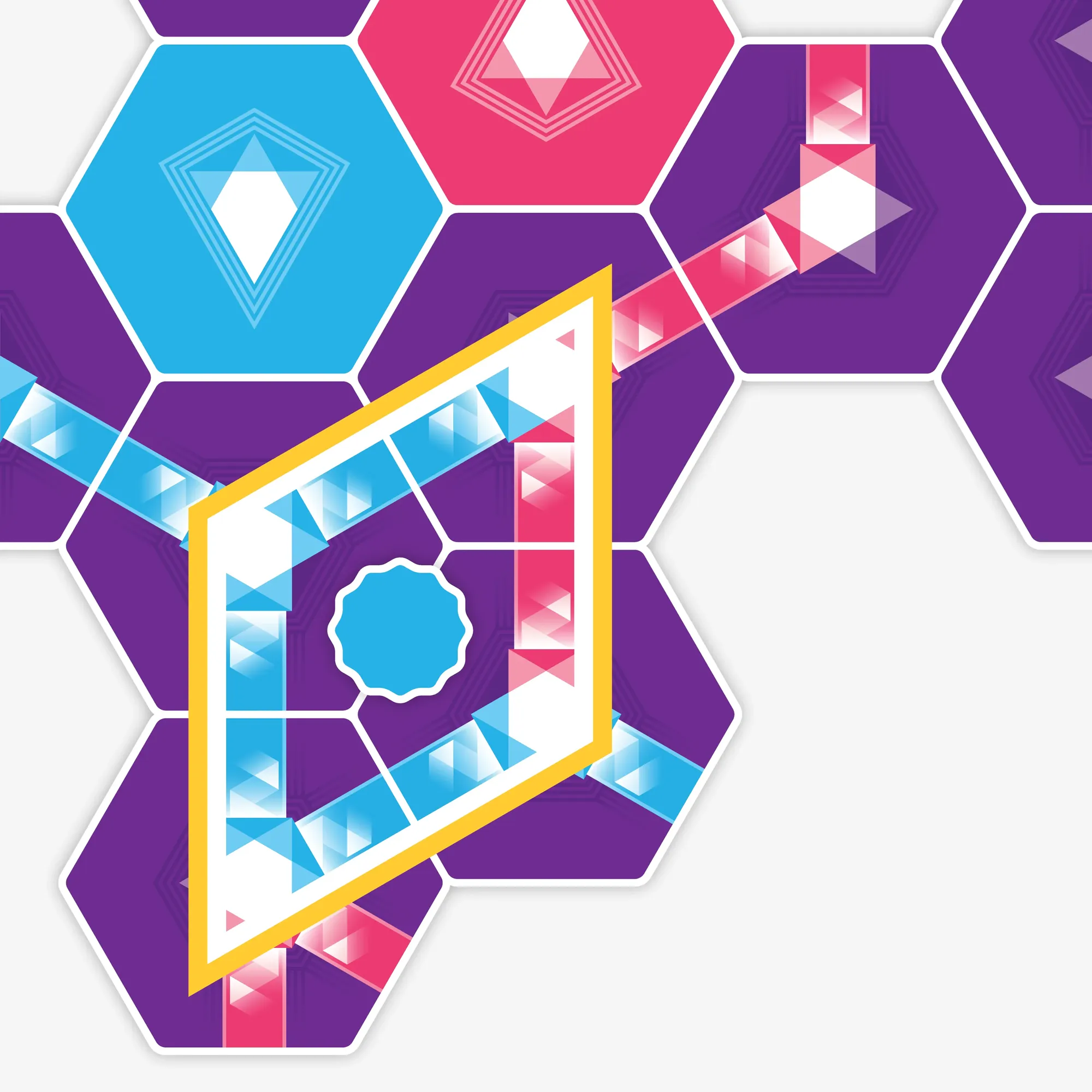
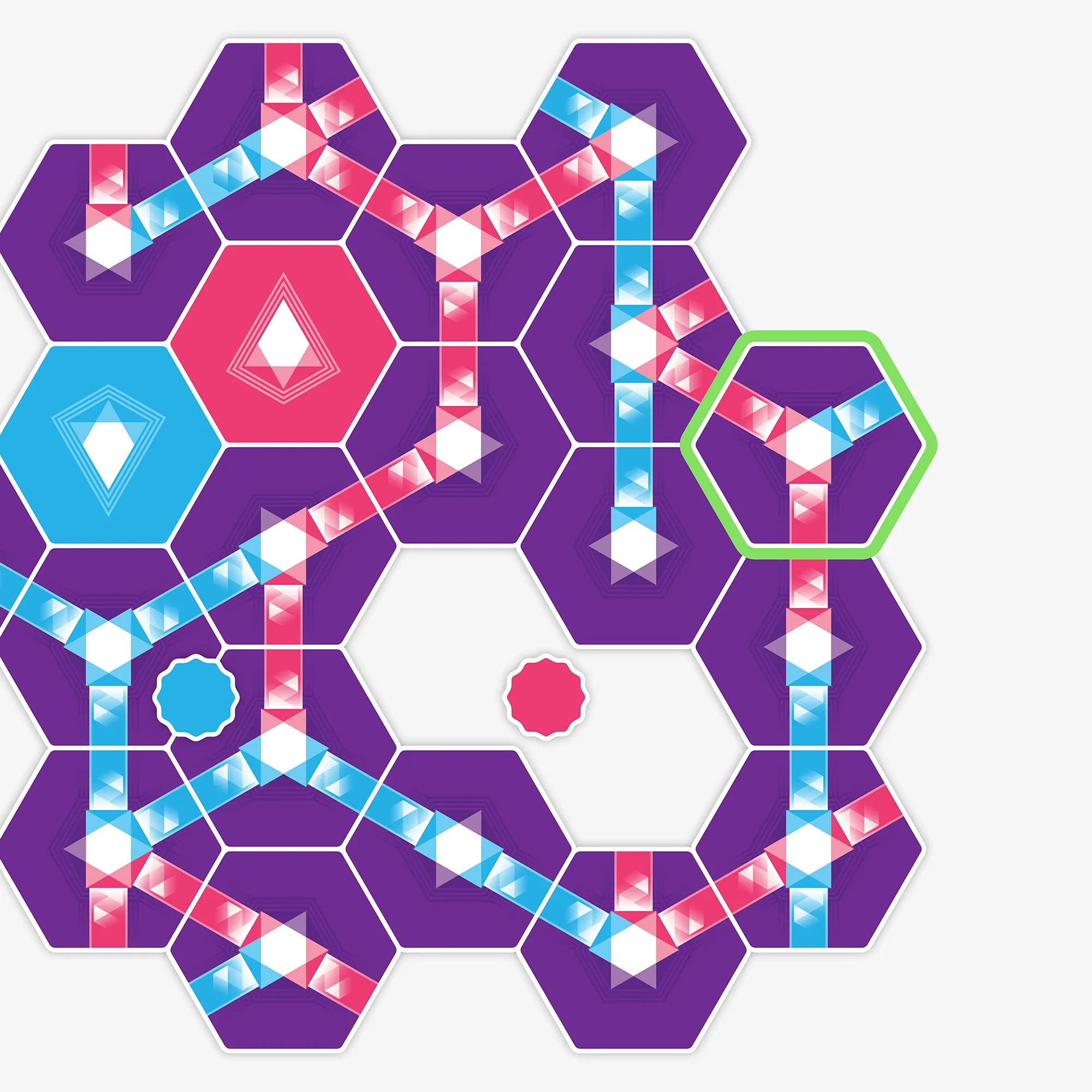
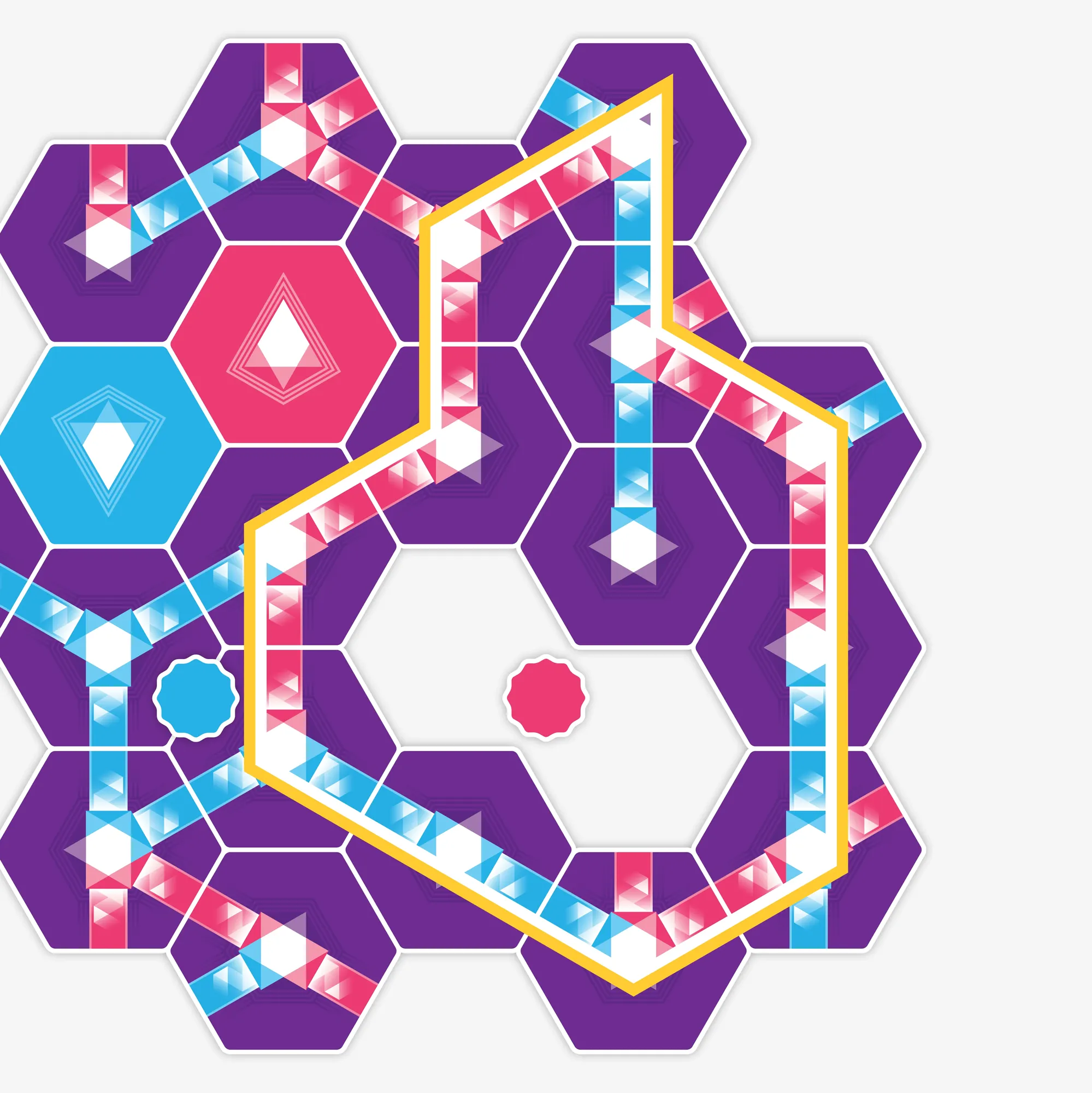
A loop is made when at least 3 tiles are placed next to one another so that their light beams connect to create a closed circuit. Small loops contain 5 or fewer tiles, and large loops contain 6 or more tiles. Empty spaces may be enclosed in a loop.
When a player makes a loop they place a loop marker in it and earn the relocation action. Only 1 relocation action is earned at a time, even if multiple loops are made in a single tile placement.
5. Linking paths
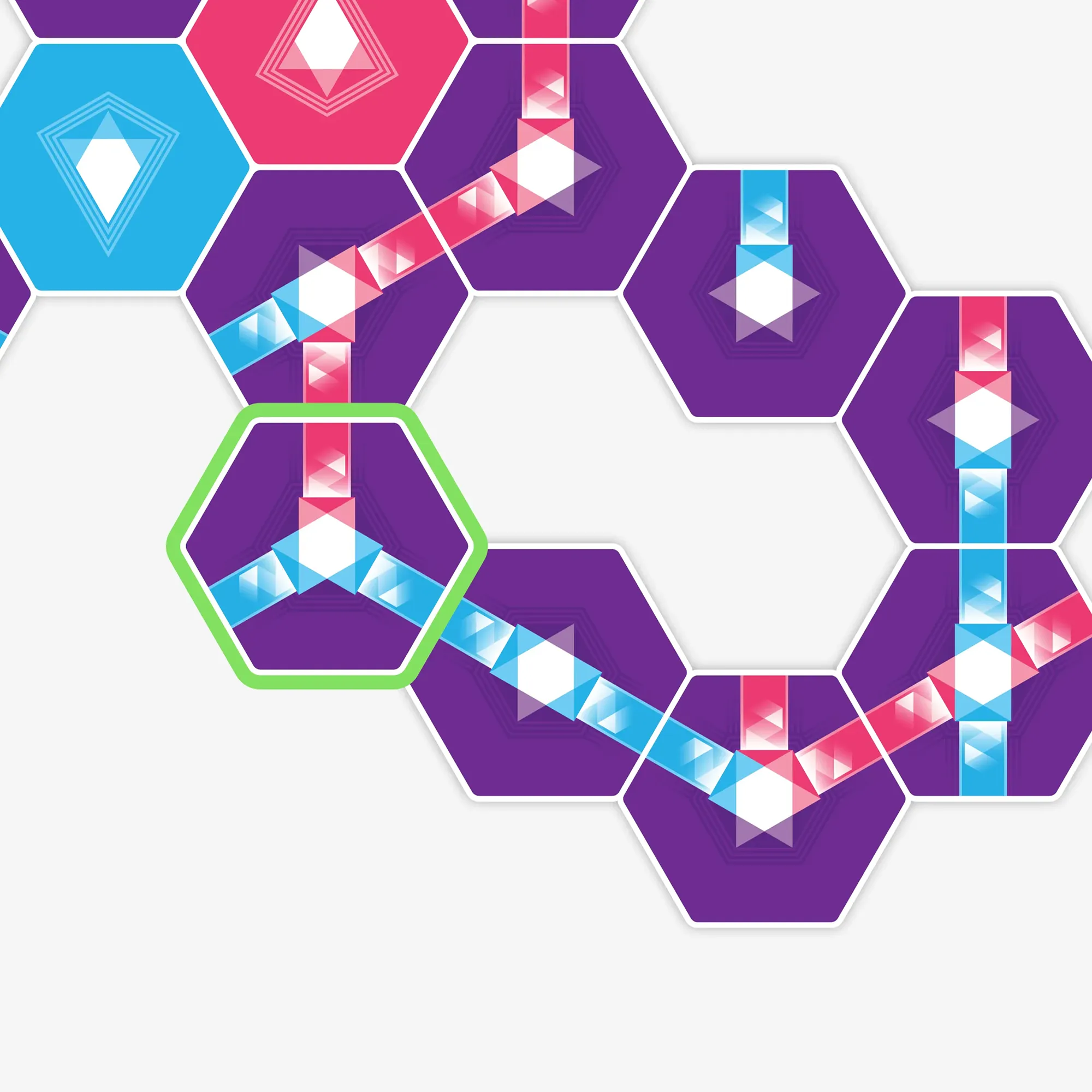
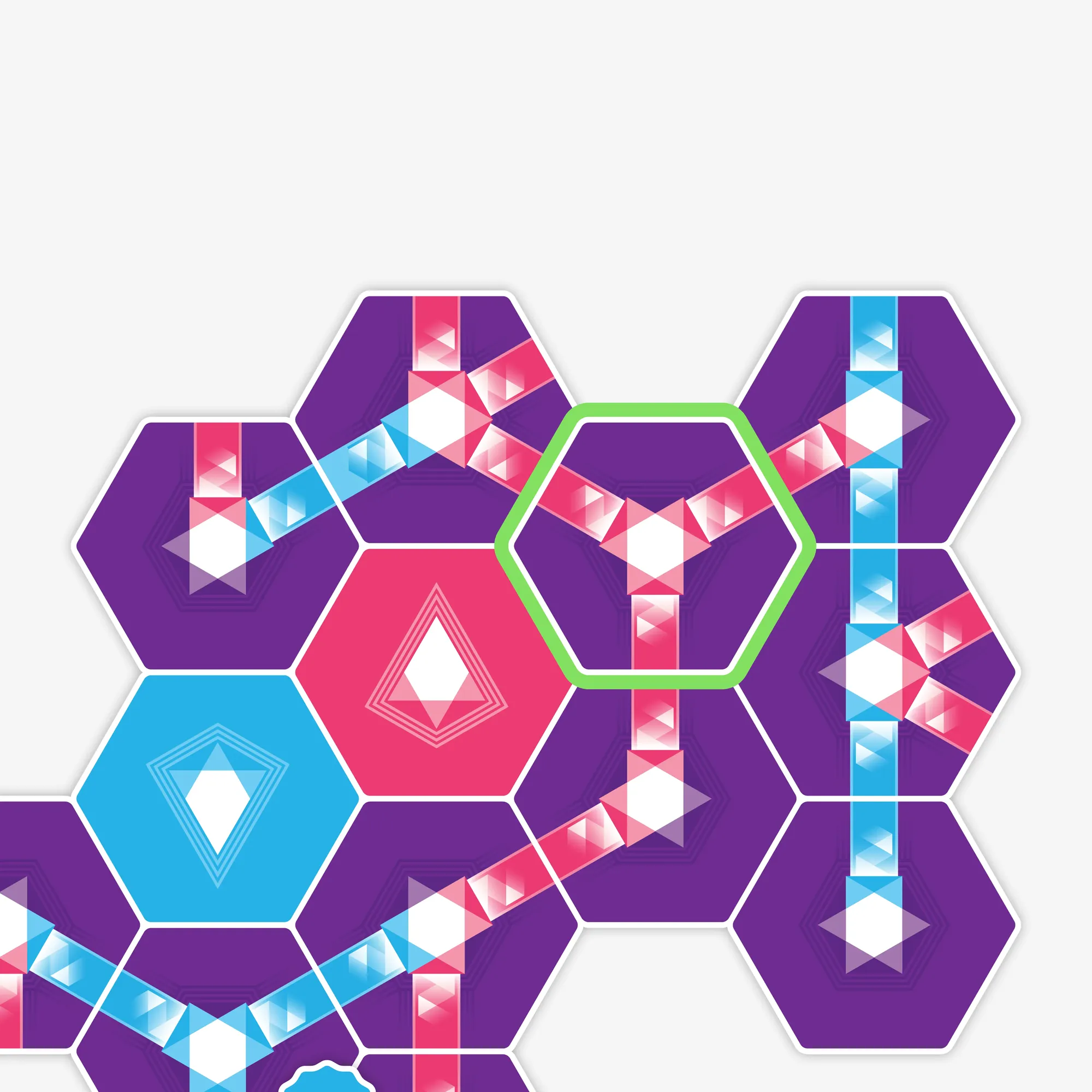
A path contains least 2 tiles whose light beams connect. When a player links 2 paths together they earn the relocation action. Only 1 relocation action is earned at a time, even if more than 2 paths are linked in a single tile placement.
If a player makes a loop and links 2 paths with a single tile placement they may follow the relocation rules for linked paths.
6. Relocating tiles
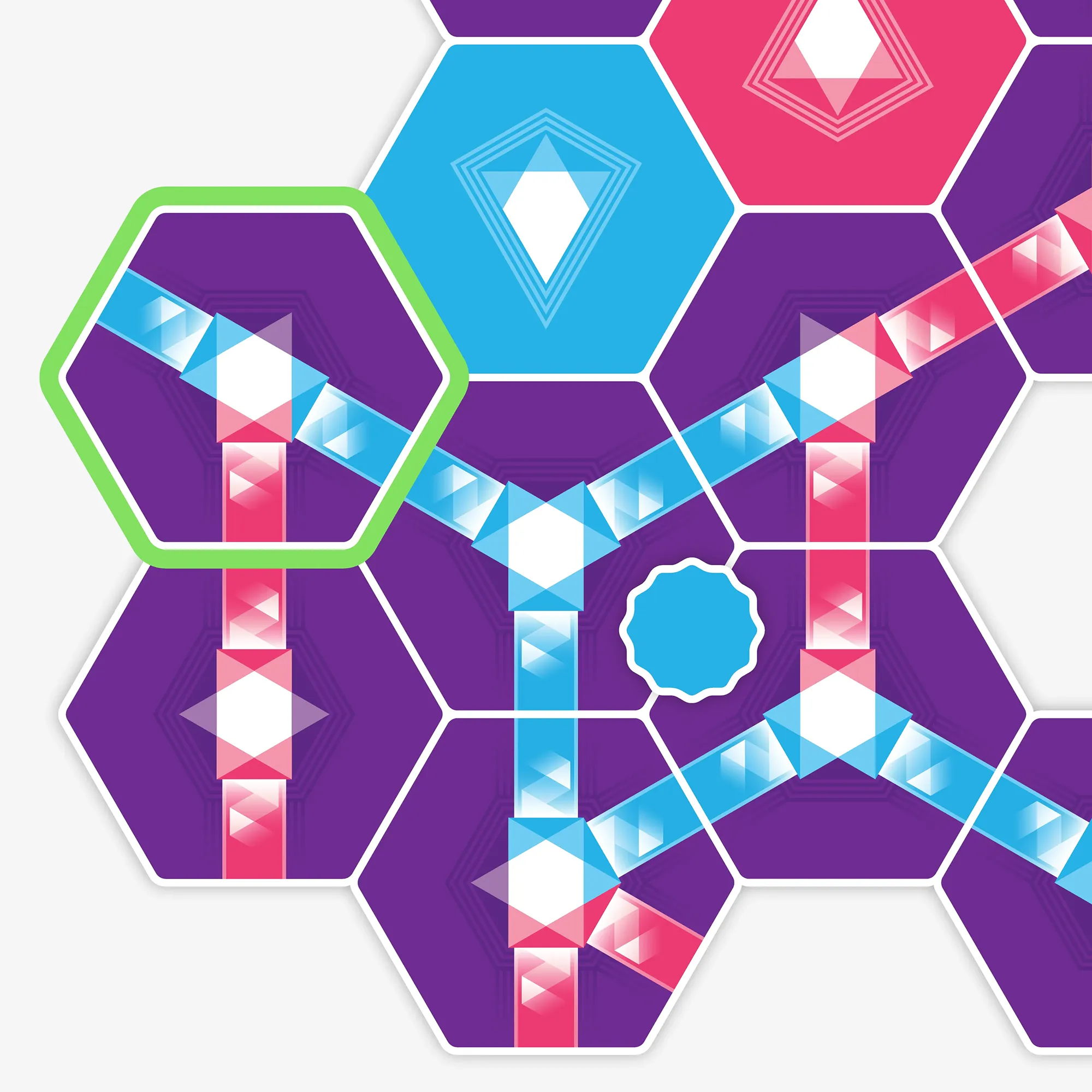
A player may relocate a light tile of their choosing (with some restrictions) immediately after making a loop or linking 2 paths. The relocated tile may be connected to other tiles or placed independently. In the latter case, it must touch another tile or a direction marker.
If the relocation action is earned by making a loop, the relocated tile may not immediately be used to make a new loop, but may if the relocation action is earned by linking 2 paths.
A transformative ability
By relocating eligible tiles, players can radically change the layout of the field of play to their benefit. Learning how to do this effectively is a key game skill.
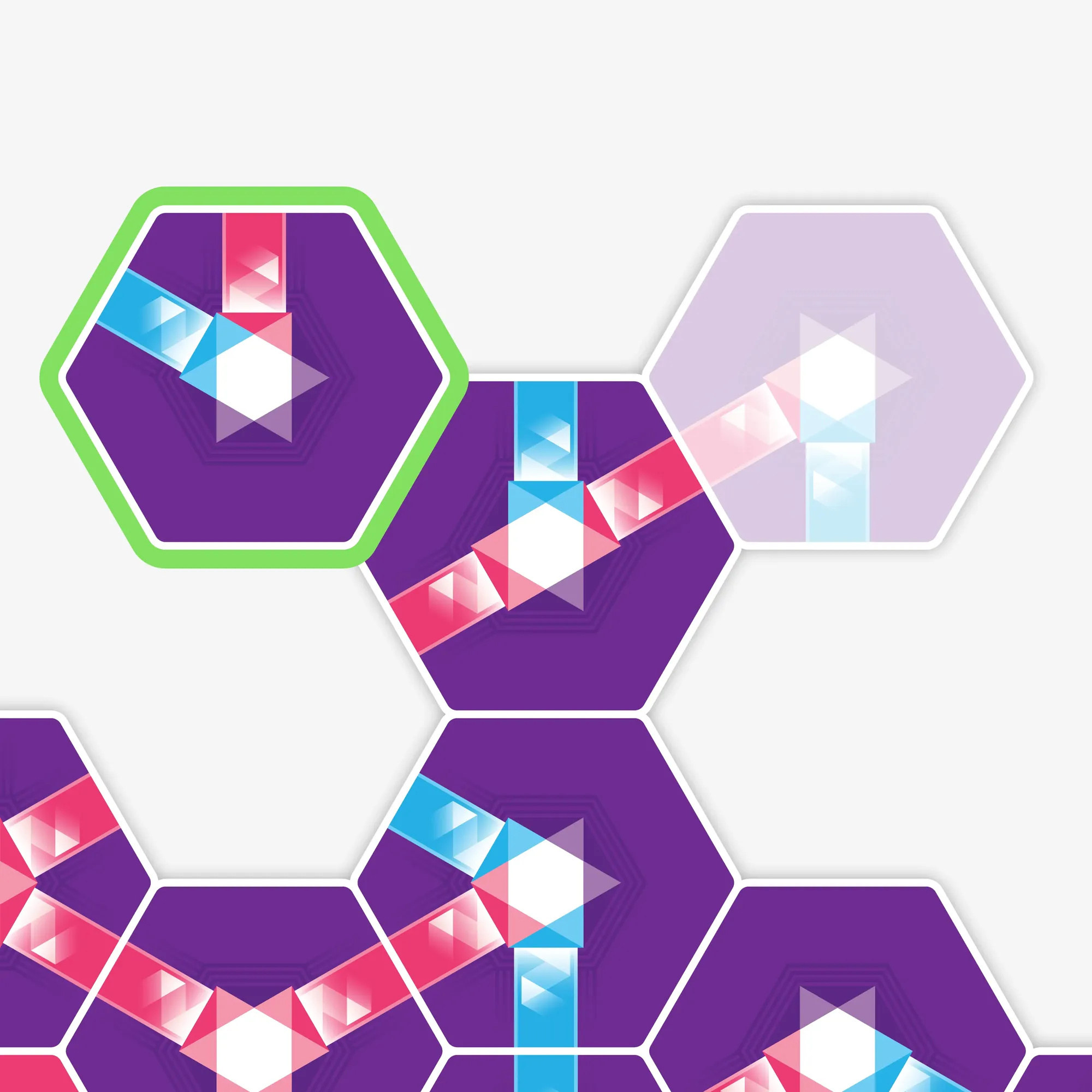
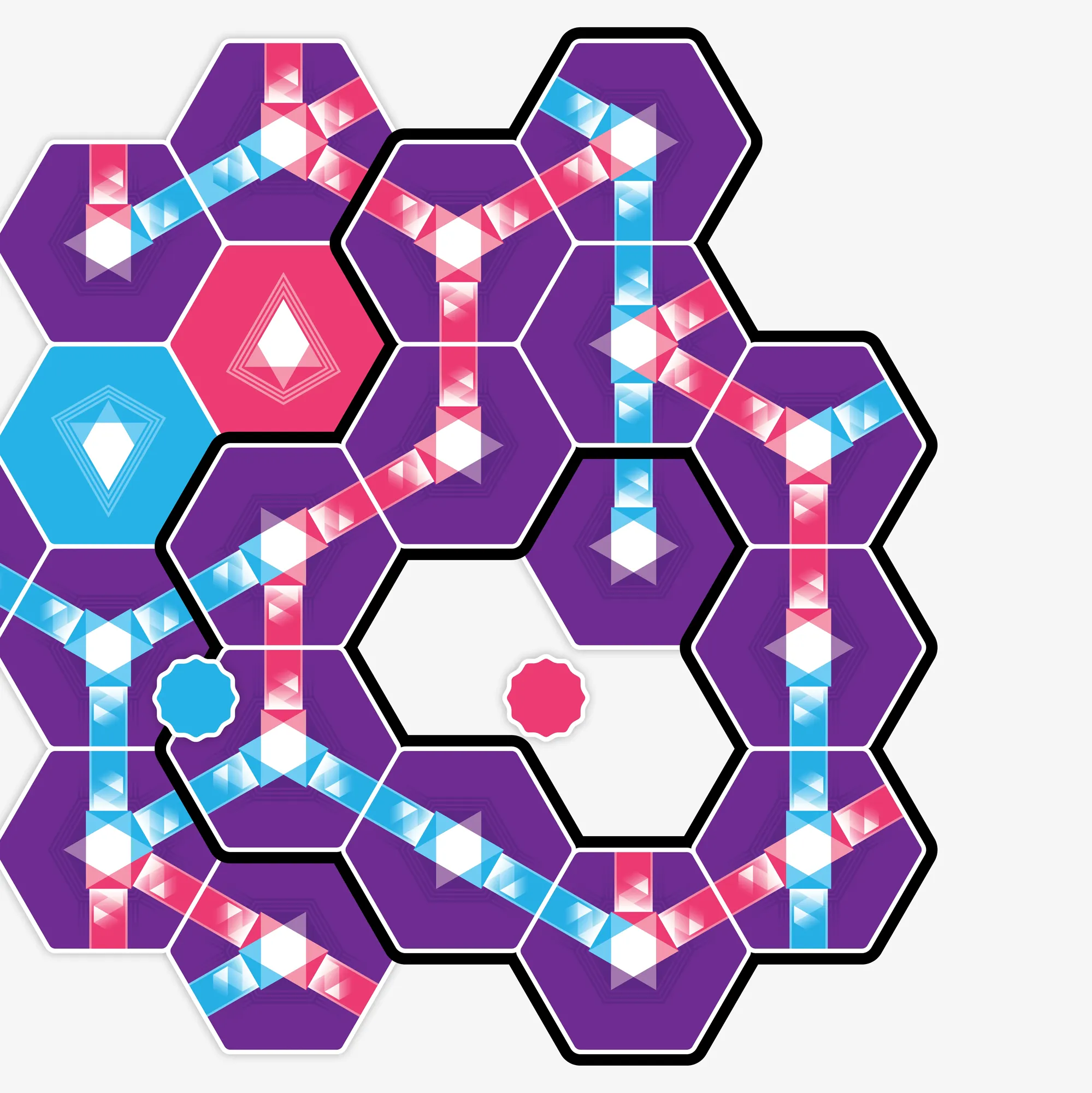
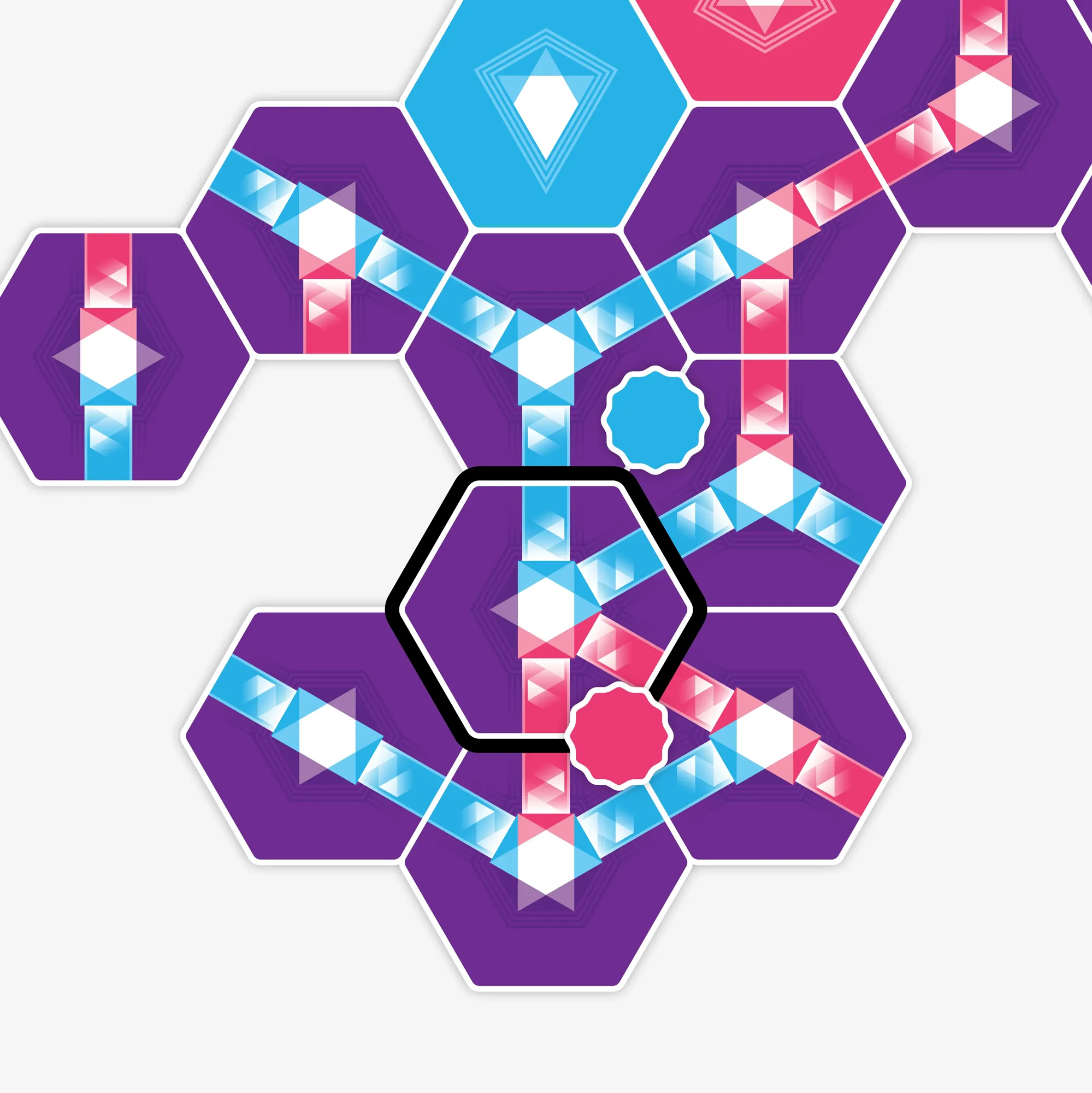
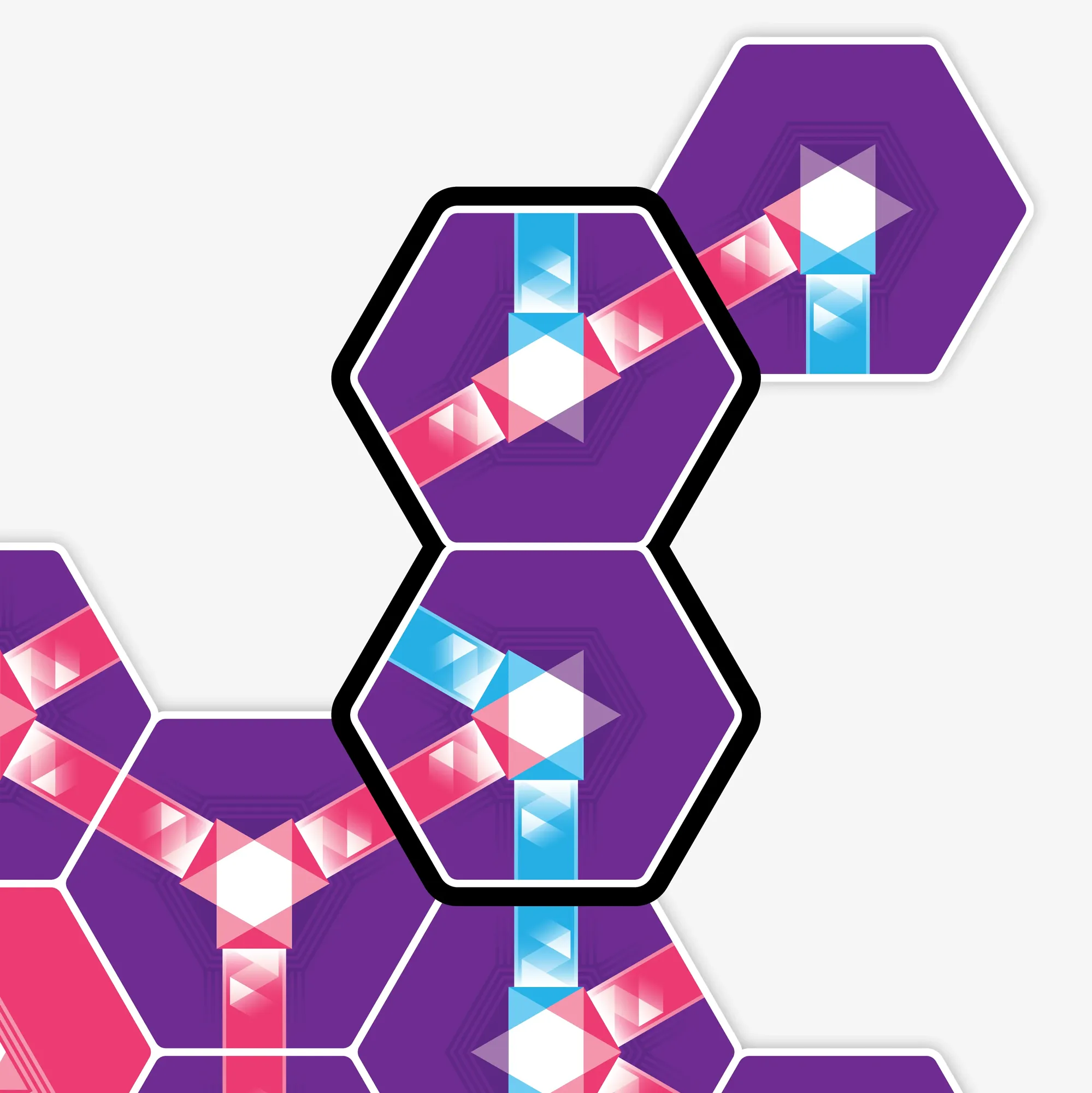
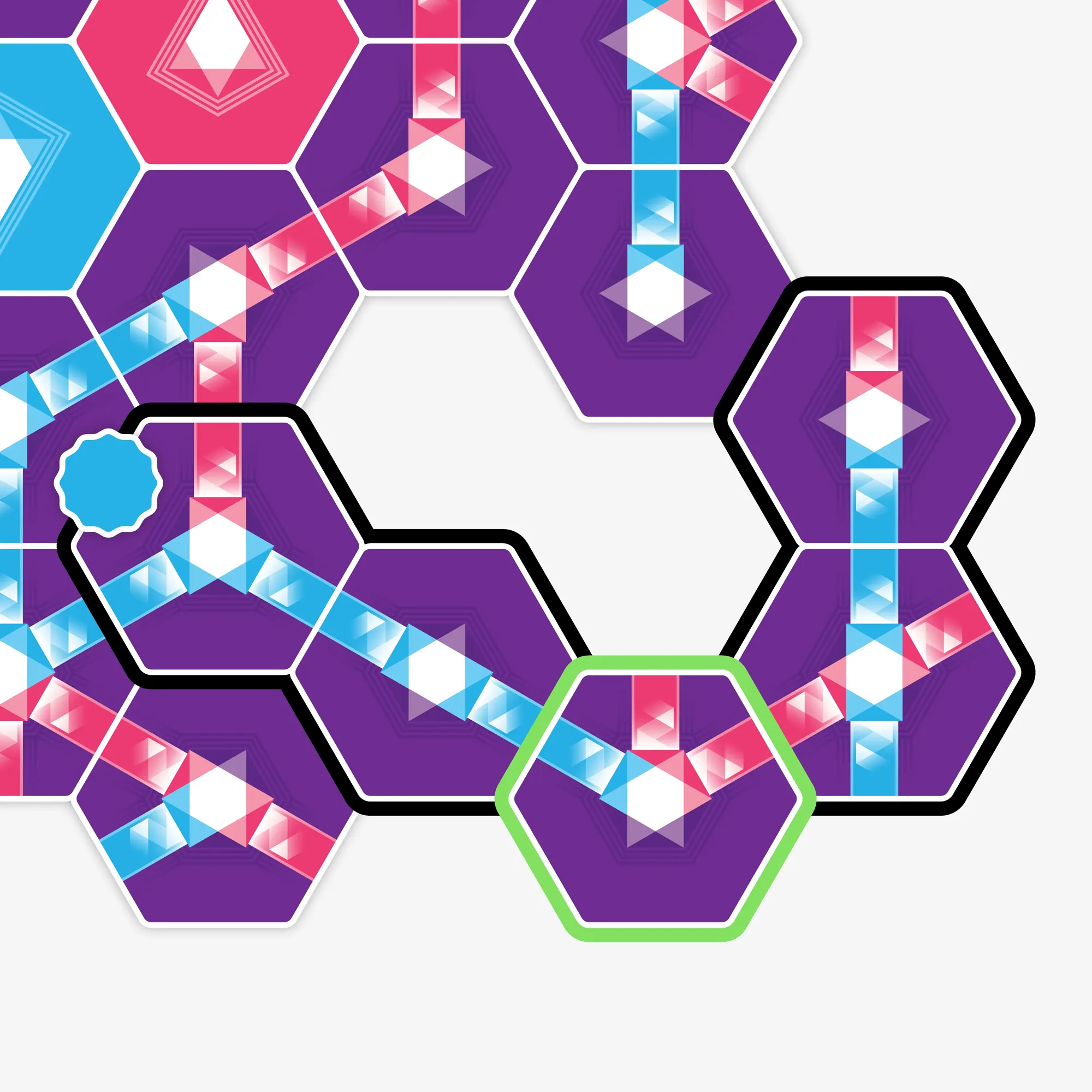
A light tile may not be relocated if it (permanent cases are in bold):
- Touches a direction marker
- Contains a single light beam
- Is part of a large loop
- Was placed or relocated in the turn
- Is shared by 2 or more loops
- Causes an island to be formed if it is relocated
- Is within 2 tiles of the tile that linked 2 paths in the turn
- Is part of a small loop protected by a frozen loop marker
7. Creating patterns
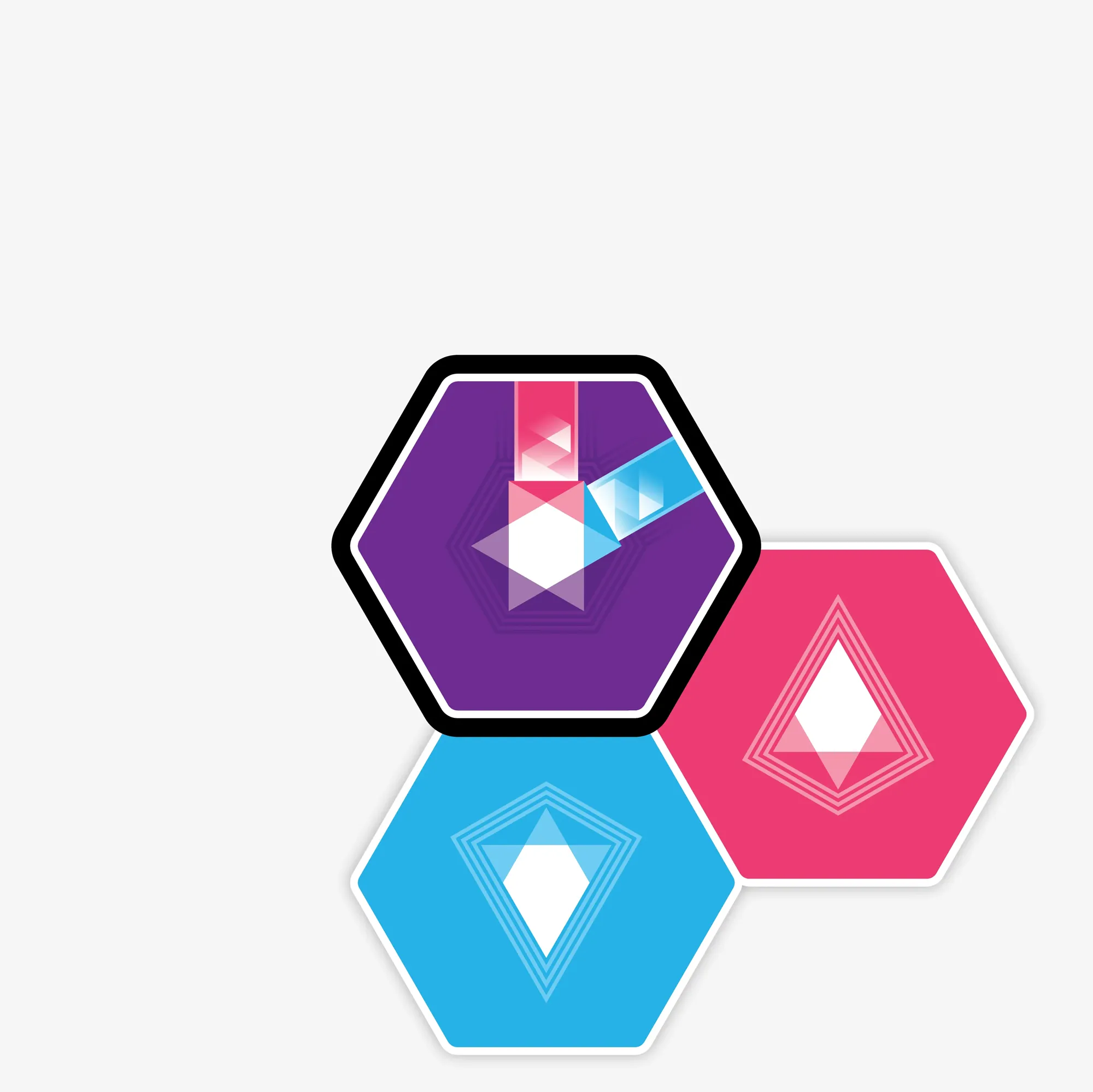
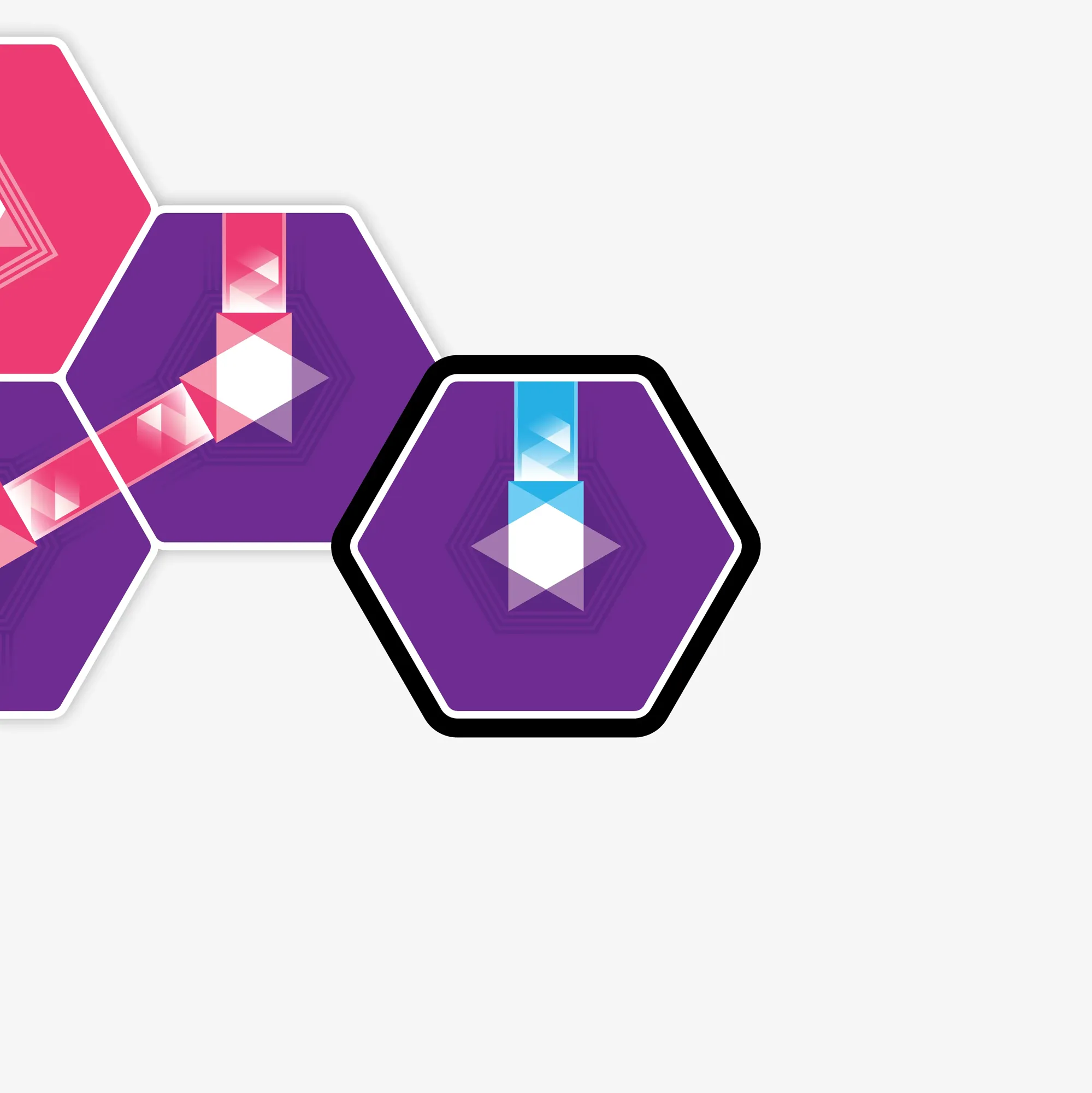
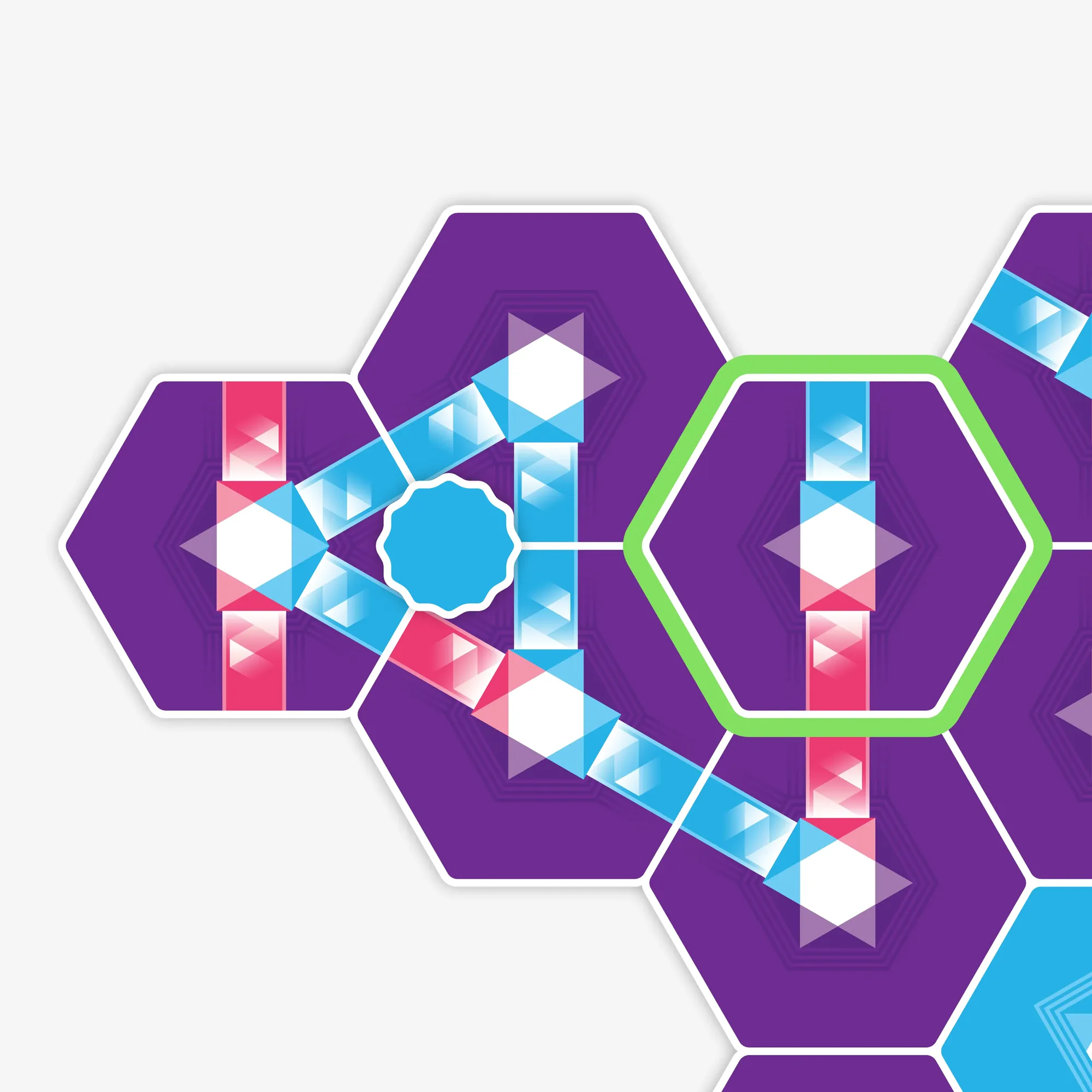
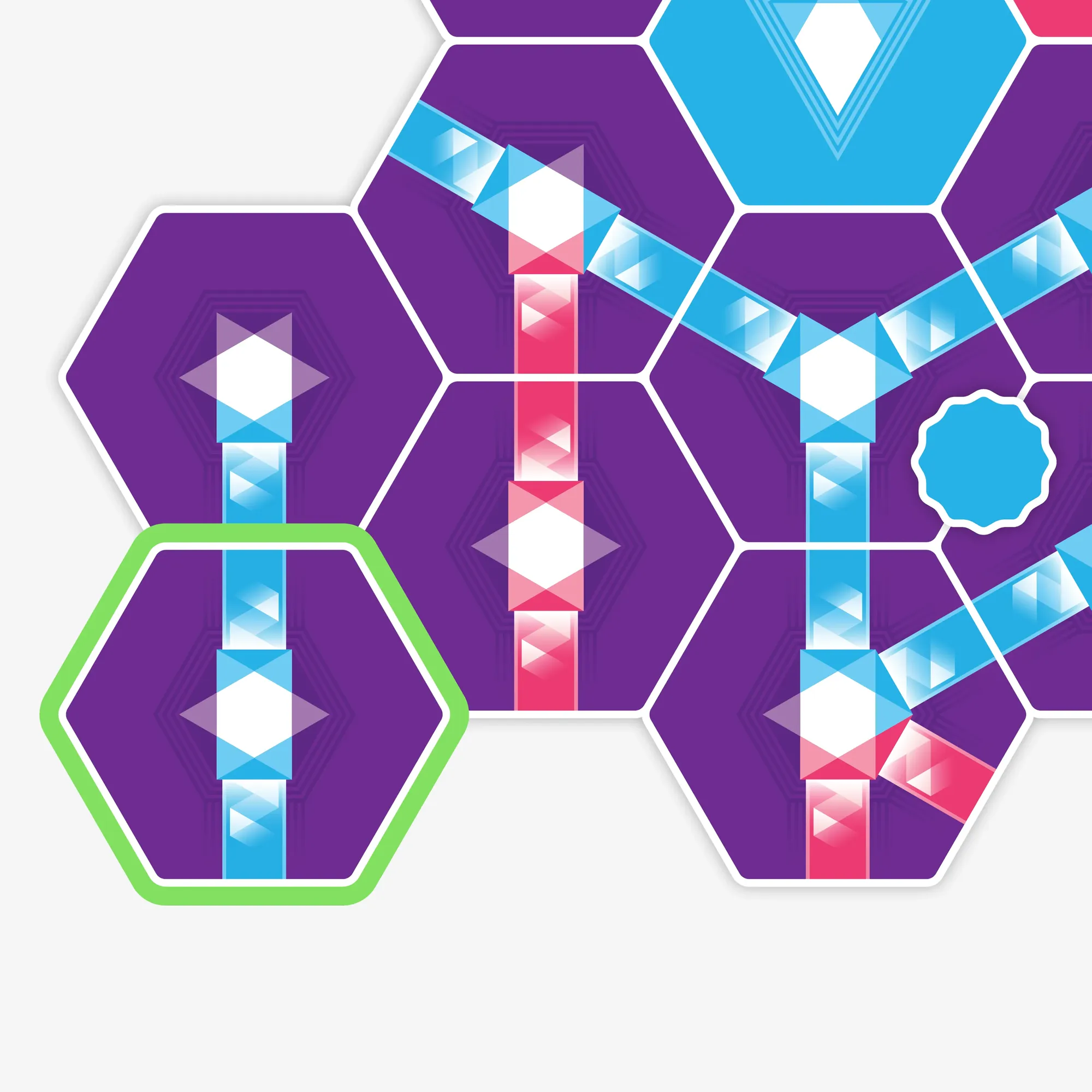
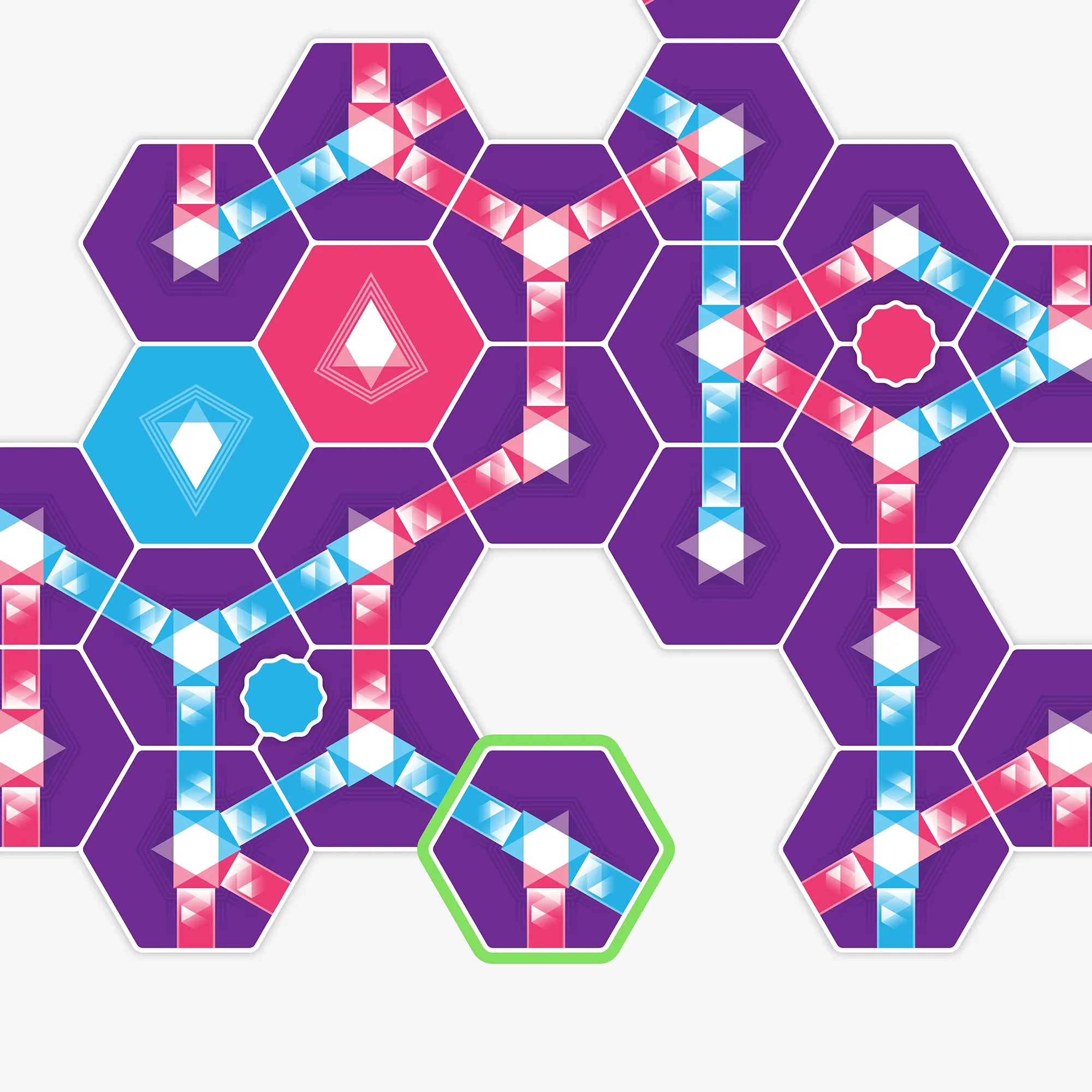
Players may create 3 types of patterns:
- X pattern: 2 or more light beams point at the player along the X axis
- Y pattern: 2 or more light beams point at the player along the Y axis
- III pattern: 3 light beams point at the player in 3 consecutive columns
A light beam only contributes to a pattern if it is in a path of 2 or more tiles. Patterns along different X or Y values are separate. X and Y patterns may be extended by adding more light beams to them. Multiple III patterns may be next to one another.
Only patterns present at the very end of the game are scoring.

False patterns
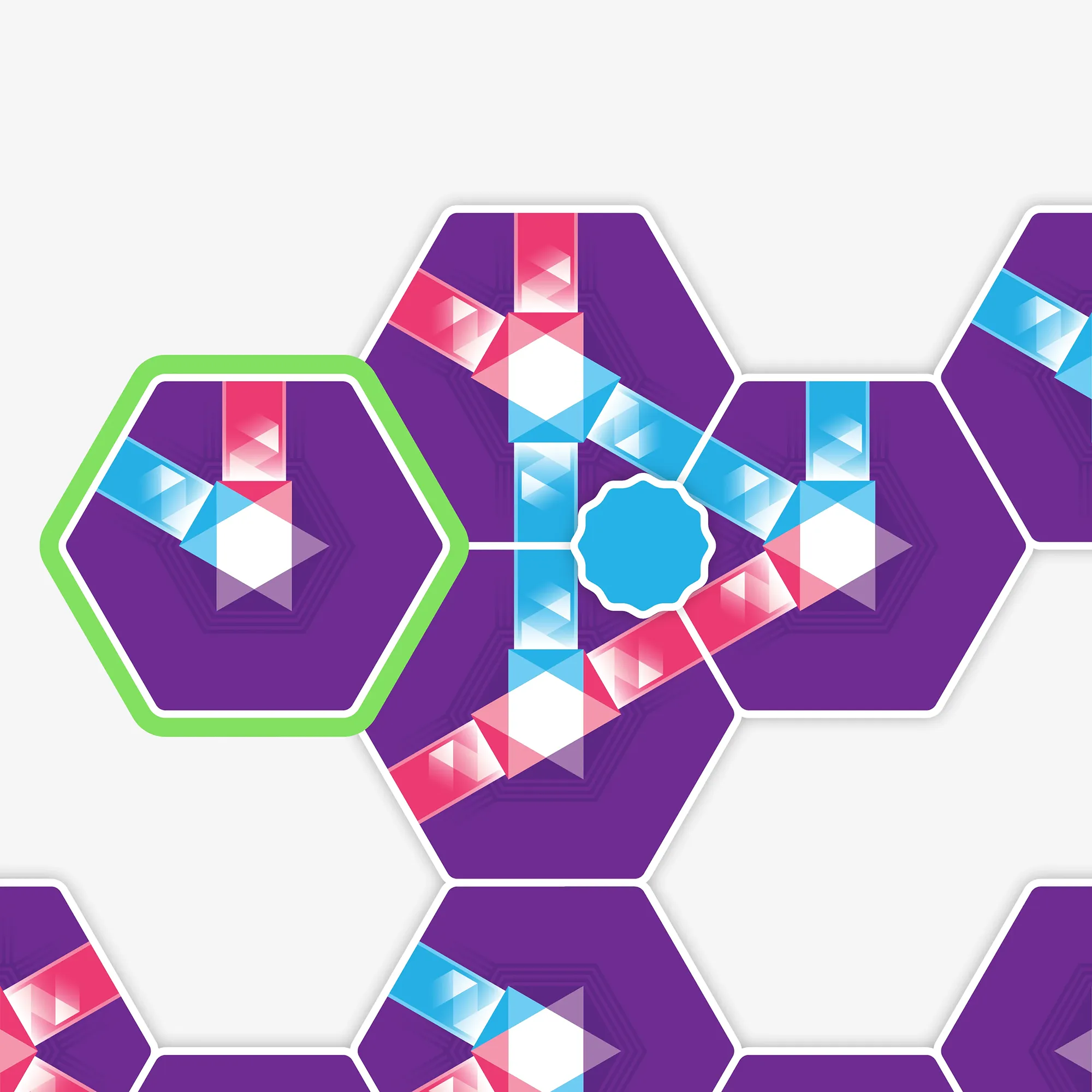
Sometimes tiles appear to form patterns, but they do not yet fulfill the requirements.
8. Breaking
The layout of light tiles on the table is dynamic and may be altered when players place new tiles and relocate existing ones. Loops, paths and patterns will often be broken during the game.
8.1 Breaking paths
A path may be broken during the middle and closing turns by any player, and may also be restored in the same turn.
8.2 Breaking patterns
Patterns may be broken during the middle and closing turns by any player, and may also be restored in the same turn. Keep in mind that patterns only score at the end of the game.
8.3 Breaking loops
During the middle turns a small loop may be broken when a player relocates a tile that forms part of it. When this happens the loop marker in it is returned to its player. It is possible to break and restore a loop in the same turn. However, large loops may never be broken, and if a large loop contains empty spaces, those spaces may never be filled. When a large loop is made only those tiles that make up the smallest new loop shape are considered to be part of it. Other tiles in adjacent loops are not included. Loops may not be broken during the closing turns.
8.4 Placing frozen loop markers (optional rule)
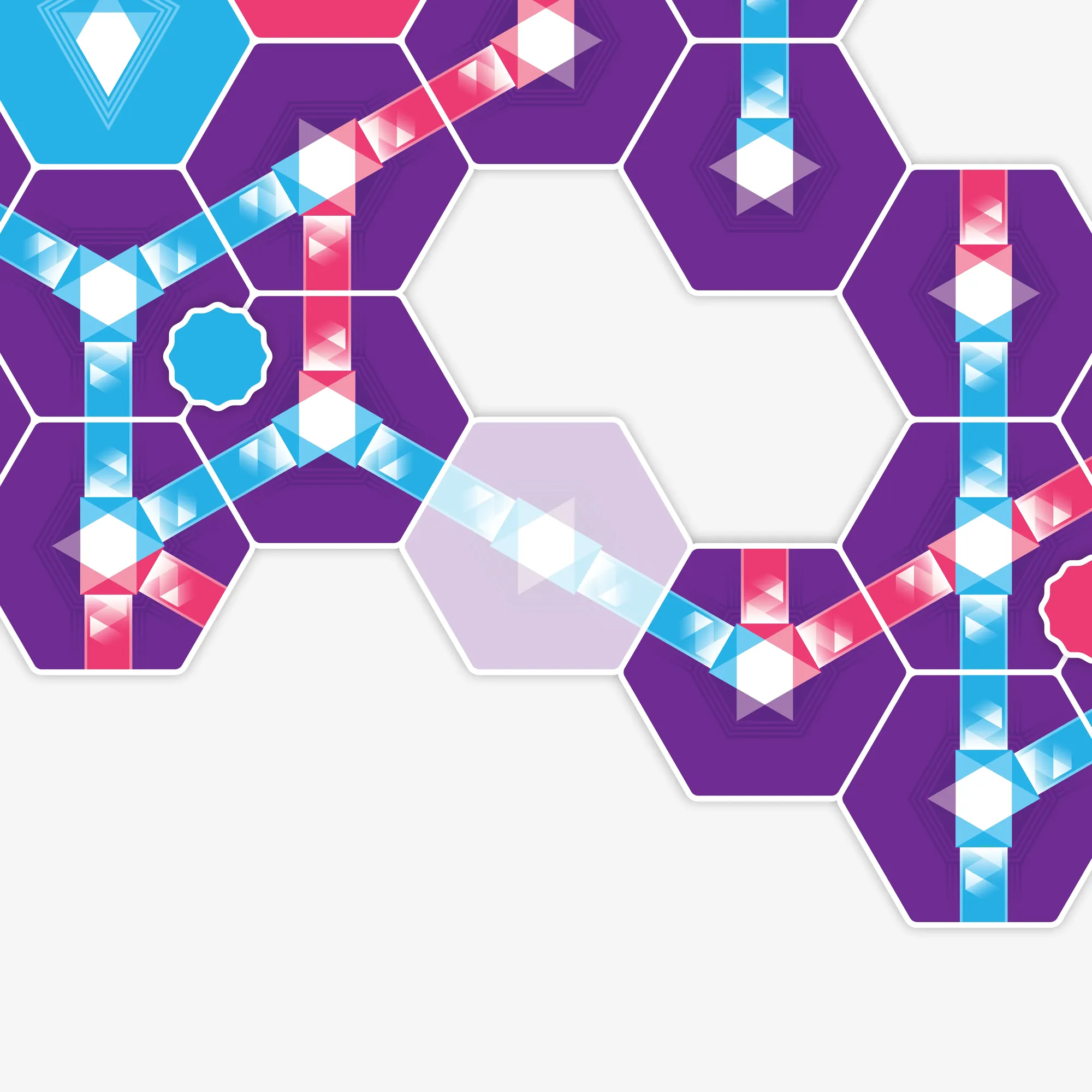
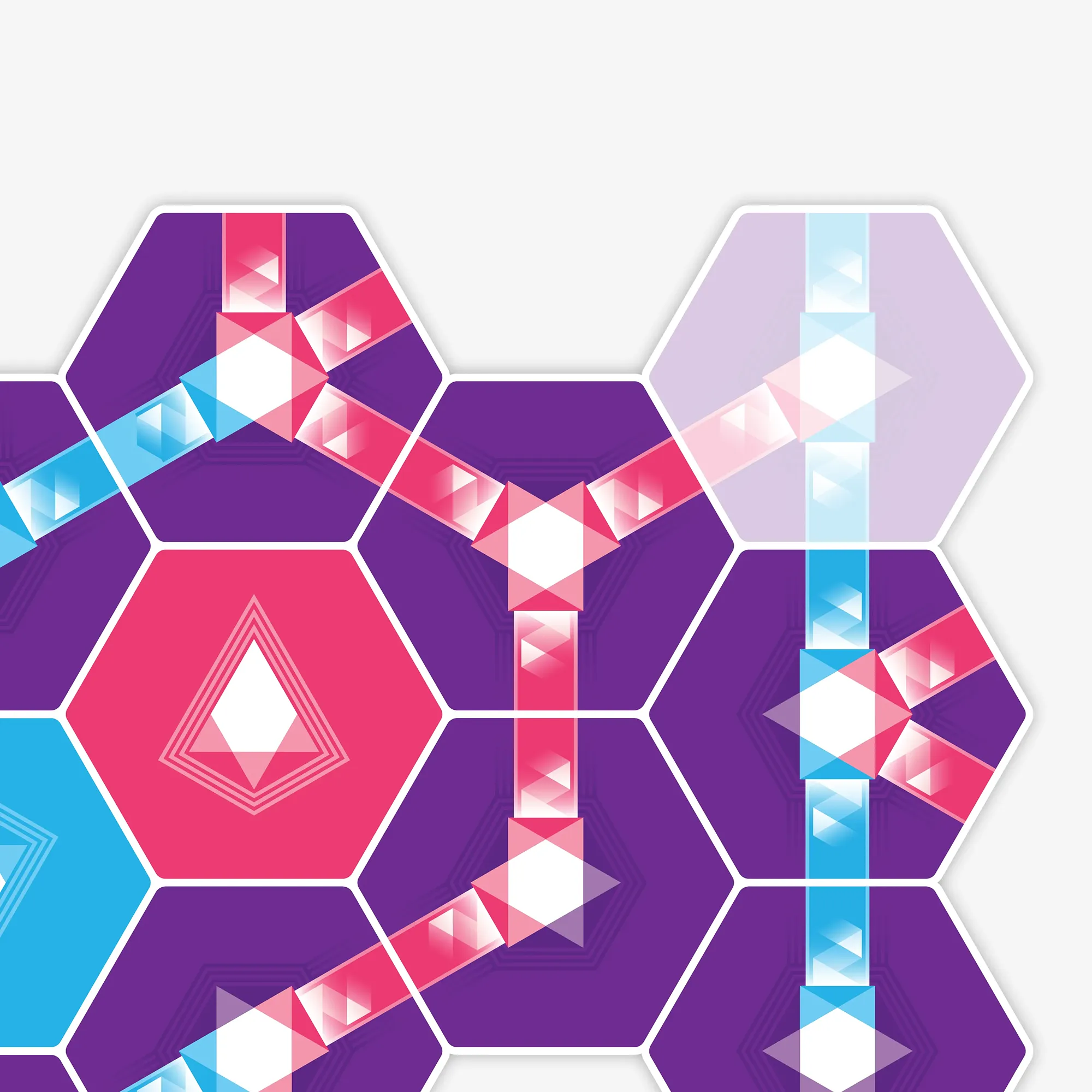
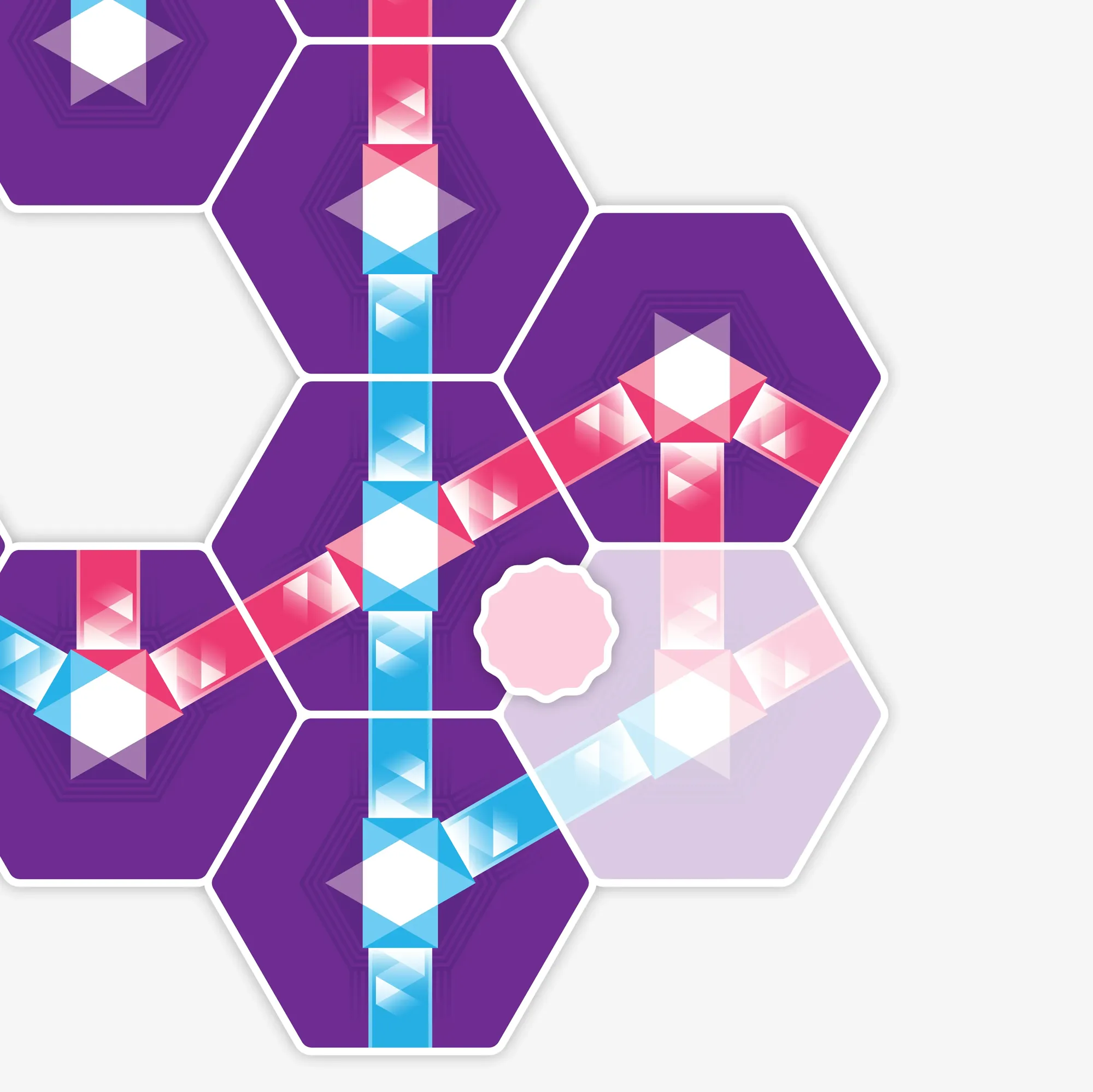
A player may protect a newly made small loop by placing their frozen loop marker. While the frozen loop marker is present the loop may not be broken.
A frozen loop marker may only be removed by a player who has just 1) made a large loop, 2) linked 2 paths or 3) made a small loop AND forfeits their relocation action. It is then replaced with a standard loop marker and returned to its player for use again.

Freezing small loops
Players may choose to play Prisma with their frozen loop markers. These markers protect small loops that would otherwise be breakable. However, these markers can be removed in certain circumstances and replaced with standard loop markers.

9. Scoring
Scores are calculated based on the light beams, scoring loops and patterns each player has at the end of the game.
9.1 Light beams
A light beam that points in a player’s direction and is part of a path of two or more tiles is worth one point. Only light beams that sit at the edge of the field of play are counted.
9.2 Loops
Loops are divided into 3 groups, and are scored as follows:
- Small loops: 1 point
- Large loops without empty spaces: 2 points
- Large loops with empty spaces: 2 points + 1 point for each empty space inside the loop
For any loop to be scoring it must connect directly or indirectly to at least 1 light beam pointing in the player’s direction.
9.3 Patterns
Each X, Y and III pattern is worth 1 point. However, X and Y patterns that contain more than 2 light beams earn an additional point for each added light beam. Also, although III patterns cannot be extended, it is possible for multiple III patterns to lie adjacent to one another.
9.4 Tiebreakers
A game of Prisma may end in a tie. However, if a winner must be determined in a tournament match, use these tiebreakers:
- The player with the most scoring loops
- The player with the largest scoring loop
- The player with the most tiles included in scoring loops
A round-robbin win earns 3 points and a tie earns 1 point.